
No Products in the Cart
Do Bears Get Angry When They’re Hungry

Hook: Bears don’t wake up “mad.” They wake up motivated, and sometimes that looks a lot like anger to us.
Humans love a simple explanation: hangry.
And sure, it’s funny… until you’re talking about a 300–1,200+ pound animal waking up in spring with a full-body to-do list.
Here’s the science-friendly truth:
Bears don’t get “angry” in the human sense the way we mean it (spite, grudges, attitude). But hunger absolutely changes behavior, and in spring that behavior can look more intense, more focused, and more defensive.
The best way to phrase it for students (and for safety) is:
Hunger increases urgency. Urgency increases risk.
Now let’s connect that to three very different bears: black bears, grizzlies, and polar bears.
First, a quick reality check on “hibernation”
Black bears and grizzlies
Black bears and grizzlies spend winter in a state often described as hibernation, but it’s helpful to teach it as low-power mode. Metabolism slows, activity drops, and they live off stored fat.
When they emerge in spring, they’re not just “awake.” They’re switching back on: muscles, digestion, movement, and constant foraging.
Polar bears
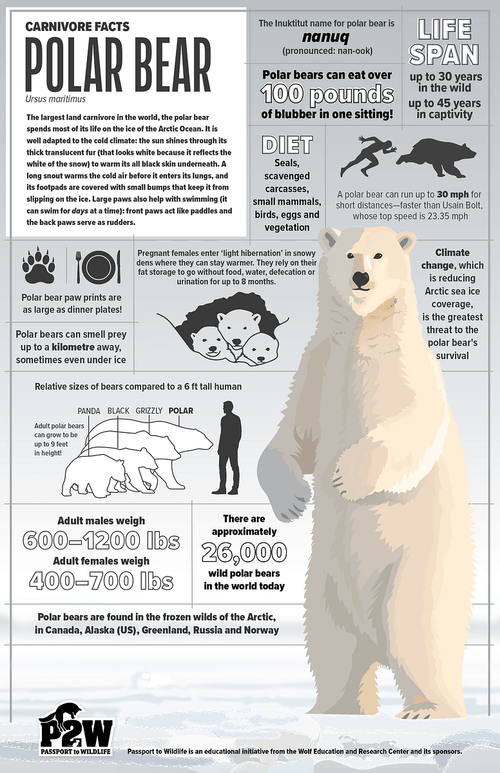
Polar bears are different. Most polar bears do not hibernate in the same way. They stay active on sea ice through winter, hunting seals when conditions allow. The main exception is pregnant females, who den and give birth, then emerge in spring with cubs and a major energy deficit.
So “waking up from hibernation” applies strongly to black bears and grizzlies, and partially (female-only) to polar bears.
What hunger does to a bear’s behavior
Hunger can make bears:
- take more risks (approach human areas, cross open ground, investigate new smells)
- spend more time moving (foraging becomes the main job)
- guard resources more strongly (a carcass, a food source, even a space)
- react faster when surprised (especially if they’re stressed or protecting young)
That can read as “angry,” but it’s more accurate to call it:
food-driven intensity + stress + surprise factor.
Black bear spring behavior
What spring looks like for them: recovery season.
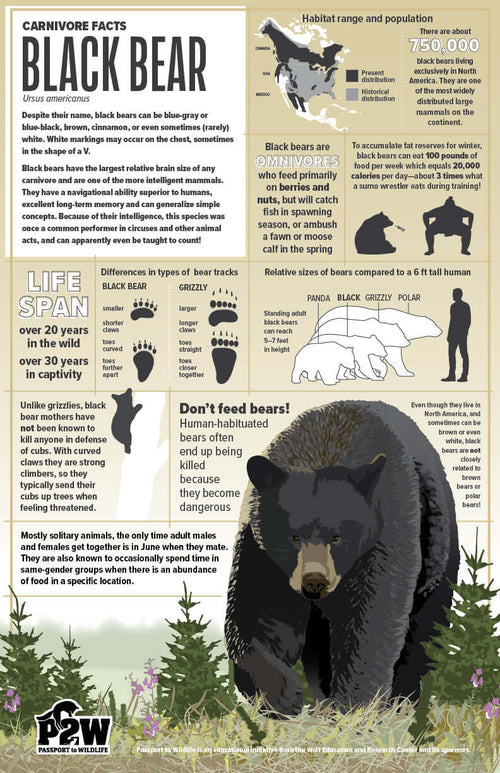
Black bears often come out looking for easy calories: fresh greens, insects, carrion, and anything that smells promising.
Do they get “angry” when hungry?
Black bears are more likely to be curious and opportunistic than confrontational. When conflict happens, it’s often because:
- the bear is surprised at close range
- it’s defending cubs
- it’s been rewarded by human food before
- a person or dog gets too close too fast
Spring takeaway: hungry black bears are less “angry,” more motivated and bold, especially around easy food sources.
Grizzly spring behavior
What spring looks like for them: high-stakes energy recovery + bigger territory realities.
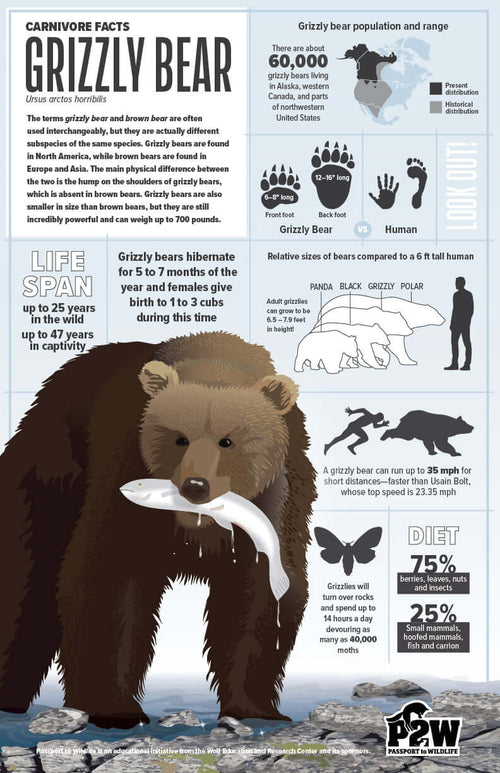
Grizzlies emerge and start rebuilding fast. Early spring foods can include greens, roots (in some regions), insects, and carcasses.
Do they get “angry” when hungry?
Grizzlies are more likely than black bears to respond aggressively in certain situations—not because they’re mean, but because their risk tolerance and defensive behavior can be different, especially when:
- a person surprises them at close range
- there’s a carcass or high-value food nearby
- a sow is with cubs
- the bear feels boxed in
Spring takeaway: hunger can increase defensiveness around food and space, and spring is when surprise encounters can be more dangerous.
Polar bear spring behavior
What spring looks like for them: hunting peak + breakup countdown.
Polar bears are sea-ice hunters. In spring, ice edges, cracks, and leads create prime seal-hunting zones. This is often when they can build fat reserves before sea ice retreats.
Do they get “angry” when hungry?
Polar bears are not “angry” so much as highly food-focused. They’re also the bear species most tied to a single hunting platform (sea ice). When that platform shrinks, hunger pressure can rise.
A key teaching point: polar bears aren’t roaming tundra thinking about humans. They’re tracking hunting access. But if food is scarce, they can be more likely to:
- travel farther
- investigate new opportunities
- show up in places people don’t expect
Spring takeaway: hunger pressure for polar bears is about access to seals and timing of ice conditions, not “mood.”
What people call “angry” is usually one of these
If someone says a bear was “angry,” it often means one of these realities:
- Surprised at close range (startle response)
- Defending cubs (protective behavior)
- Defending food (resource guarding)
- Conditioned to human food (learned behavior, more persistent)
- Stressed by scarcity (higher risk-taking, less avoidance)
So yes, hunger can be part of the story. But it’s not the whole story.
Teacher-friendly way to explain it
Try this line in a classroom:
Bears don’t wake up mad. They wake up with a mission.
And in spring, their mission is simple: find calories efficiently.
If you want an even clearer framework:
- Hunger increases movement
- Movement increases encounters
- Encounters can increase conflict
- Conflict can look like “anger,” but it’s usually fear, defense, or food protection
That’s a great ecology-to-safety connection without fearmongering.
Classroom connection
Quick activity: “Hangry or Strategic?” Behavior Sorting
Give students scenario cards and have them label each as:
- Food-driven strategy
- Defensive behavior
- Startle response
- Human-conditioned behavior
Example scenarios:
- “Bear flips logs near a creek in April.” (strategy)
- “Bear charges when a dog runs toward it.” (defensive/startle)
- “Bear stays at an overflowing dumpster repeatedly.” (human-conditioned)
- “Bear guards a carcass on a hillside.” (food defense)
Then students write one sentence:
“This looks like anger, but it’s actually ____ because ____.”
That’s scientific thinking and safety thinking at the same time.
The takeaway
Do bears get angry when they’re hungry?
They don’t get “angry” like humans do. But hunger can make bears more driven, more persistent, and more defensive, especially in spring when their energy budget is tight and they’re rebuilding after winter (or racing sea-ice change, in the polar bear’s case).
Black bears: bold and opportunistic.
Grizzlies: more defensive in high-stakes situations (surprise, cubs, food).
Polar bears: intensely food-focused, shaped by ice access and timing.