
No Products in the Cart
Spring Is Coming: Owl Nests, Owlets, and the Season of Quiet Chaos

How baby owls arrive, what it means for their survival, and how different North American owls do nesting differently (yes, including Barn Owls).
Somewhere right now, while winter is still trying to look confident, an owl pair is already in full “spring mode.”
Not flowers-and-butterflies spring.
More like: night shifts, nest defense, and an urgent need to turn mice into parenting.
Owls don’t wait for perfect weather. Many species start nesting late winter into early spring, because by the time leaves pop and frogs sing, they want chicks that are already growing—hungry, fluffy, and practicing their future job: being a very serious predator.
The Big Idea: Owls Start Early Because Babies Take Time
Owls don’t hatch ready-to-hunt. They hatch as tiny, helpless fluff nuggets with one skill:
being hungry.
Starting early gives them time to:
- hatch
- grow fast
- fledge (leave the nest)
- and still have months to practice hunting before the next winter tests everything
For an owl, spring isn’t a celebration—it’s a deadline.
Owl Baby 101: From Egg to “Why Are You Standing on Your Sibling?”
1) Nest selection
Most owls don’t build nests like songbirds. They use what’s available:
- tree cavities
- old hawk/crow nests
- cliff ledges
- barns and rafters (Barn Owls, of course)
- nest boxes (when humans provide them)
2) Eggs and incubation
Typically the female incubates while the male brings food (species roles vary, but this is common). The “sit tight” stage is long enough that early nesting matters.
3) Hatch timing
Here’s a classic owl twist: many owls hatch asynchronously—eggs hatch in the order they were laid.
That means a nest can look like:
- one big chick
- one medium chick
- one tiny chick
…all at the same time.
It’s not a mistake. It’s a survival strategy. When food is plentiful, more chicks make it. When food is scarce, the family still has a chance to raise at least one strong chick.
Nature is not sentimental. It is practical.
4) “Branching” and fledging
Many young owls leave the nest before they can truly fly well. They branch—climbing around near the nest, hopping to nearby limbs, and building strength.
They may look abandoned. They aren’t. Adults are usually nearby, feeding and guarding them.
What Nesting Means for an Owl’s Whole Life
The nesting season is when owl lives get decided by three things:
- Food supply (rodents, small birds, insects—depending on species)
- Safe shelter (predators, storms, human disturbance)
- Practice time (fledglings need a long runway before winter)
A successful nest doesn’t just create owlets. It creates next year’s hunters.
Nesting Styles: How Major North American Owls Do Spring Differently
Below are the “big characters” teachers and students are most likely to meet in lessons and field guides.
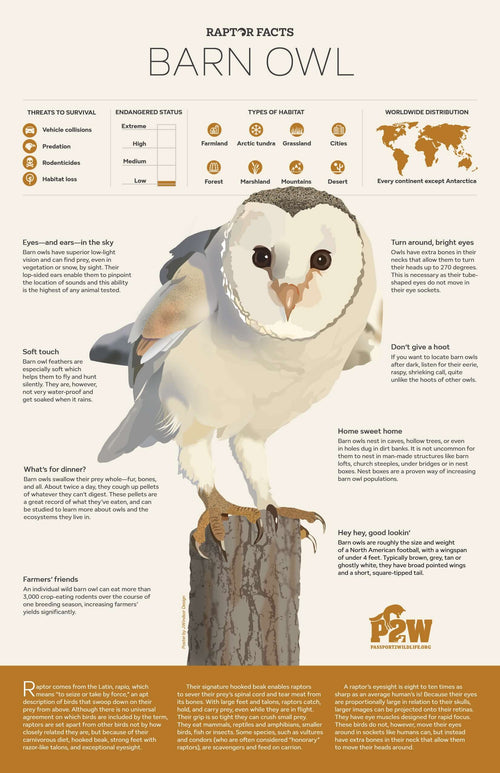
Barn Owl: The Barn-Living Rodent Specialist
Nest style: cavities in barns, silos, old buildings, cliff hollows, nest boxes
Timing: often nests early; in some places can nest in extended seasons if food is abundant
Family vibe: “Rodent control, but make it a nursery.”
Barn owl chicks can be especially noisy—hissing, begging, and sounding like tiny haunted kettles. (It’s adorable once you accept it.)
Teach it: Barn owls are a perfect food web ambassador because their diet is so rodent-heavy—pellets tell the story clearly.
Great Horned Owl: The Early-Starter Powerhouse
Nest style: usually takes over old hawk/crow nests; also ledges and platform nests
Timing: among the earliest nesters in many regions (late winter into early spring)
Family vibe: “We moved into this nest without asking.”
Great horned owls are famously tough and territorial—nest defense is intense.
Teach it: Great horned owls are a strong example of adaptation + timing: they start early so their chicks are big before other prey cycles shift.
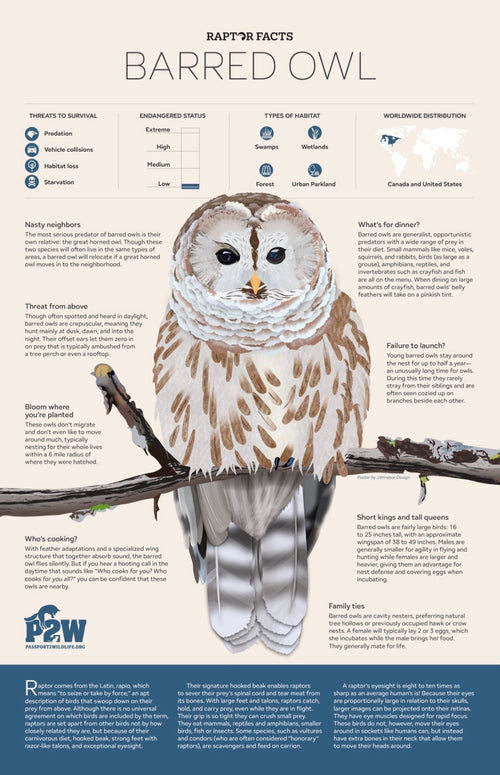
Barred Owl: The Forest Voice With a Family Plan
Nest style: tree cavities, broken-top trees, sometimes old nests
Timing: spring nesting is common; timing varies by region
Family vibe: deep woods, steady parenting, very vocal
This is the owl students often recognize by voice—even before they see one.
Teach it: Great for sound-based lessons and habitat discussions: mature forests + water edges often matter.
Eastern Screech-Owl: The Backyard Cavity Owl
Nest style: tree cavities and nest boxes (small spaces, big personality)
Timing: spring nesting
Family vibe: small owl, big confidence
These owls do well where people leave tree cavities and provide nest boxes—proof that “habitat” can exist in surprising places.
Teach it: Perfect for “habitat pockets” and neighborhood wildlife lessons.
Great Gray Owl: The Deep-Winter Forest Giant
Nest style: often uses old nests or broken-top trees in boreal forests
Timing: spring nesting, tuned to northern conditions
Family vibe: patient, quiet, very tied to vole cycles
In some northern systems, breeding success is tightly linked to rodent abundance.
Teach it: Great example of how predator reproduction tracks prey populations.
Snowy Owl: The Wild Card of the North
Nest style: ground nest on tundra
Timing: nests in Arctic summer when conditions allow; not a typical “spring woods” nester
Family vibe: “We nest when the tundra says yes.”
Snowy owl nesting is strongly tied to prey cycles (especially lemmings). Not every year is a nesting year.
Teach it: Excellent for lessons about cyclic prey populations and extreme habitats.
Burrowing Owl: The Ground-Nesting Neighbor
Nest style: underground burrows (often made by prairie dogs or other burrowers)
Timing: spring and summer nesting
Family vibe: daylight-friendly, prairie community member
This is the owl that flips the script—often active in daylight and living underground.
Teach it: Great for ecosystem connections: grasslands, burrow networks, and shared habitat.
Field Notes: How to Tell Nest Season Is Happening
(Without ever needing to approach a nest.)
Look for:
- more owl calling at dusk and night (territory + pair contact)
- repeat flight paths to a specific tree line or building
- a “guard owl” posture—one bird posted like a security camera
- lots of activity at the same perch (delivery and feeding routes)
Important reminder for classroom communities:
Nests should be observed from a distance. Nest disturbance can cause failure, especially early in incubation.
Classroom Connection: “Owl Family Timeline” + Survival Math
A simple activity that gets kids thinking like ecologists.
Materials
- timeline template (or board)
- species cards (Barn Owl / Great Horned / Barred / Screech / etc.)
- optional: prey cards (mouse, vole, small bird, insect)
Steps
- Choose one owl species per group.
- Have students build a life timeline: Nest → Eggs → Hatch → Branching → Fledge → First winter.
- Add “survival challenge cards”:
- late snowstorm
- low rodent year
- nest site disturbance
- abundant prey year
Students answer:
What stage is most vulnerable? What adaptation helps most?
Extension (CER writing)
Claim: Early nesting increases survival chances.
Evidence: Owlets need time to grow and practice before winter; food availability affects outcomes.
Reasoning: More time before winter = higher odds of hunting success.
Product Pairing Ideas
If you’re teaching nesting + survival, these pair naturally:
- Owl posters (species differences, habitat, anatomy)
- Owl pellet labs (diet evidence: “What does this owl actually eat?”)
A nice sequence is:
Nesting story (spring) → pellet evidence (diet) → food web model (ecosystem).
The Takeaway
Spring nesting isn’t just “baby season.” It’s the moment owls place a bet on the future.
They choose a nest site. They commit to a food supply. They raise owlets who must learn fast—because the world does not slow down for fluff.
And when you compare Barn Owls in rafters, Great Horneds squatting old nests, Screech-Owls in tiny cavities, and Snowy Owls on the tundra…
There isn’t one “owl way.” There are many strategies—each shaped by habitat, prey, and the calendar of survival.