
No Products in the Cart
Barred Owl vs Great Horned Owl: Two Neighbors, Two Strategies

Hook: Same forest. Totally different job titles.
If you’ve ever heard an owl at night and thought, “Okay, that’s the forest speaking,” there’s a good chance you were listening to one of two neighbors:
- the Barred Owl (the talker)
- the Great Horned Owl (the boss)
They can share the same general landscape, sometimes even the same stretch of woods… but they do not play the same role. Different habitat preferences. Different calling style. Different nesting approach. Different prey “menu.”
Same neighborhood. Different strategies.
Meet the Neighbors
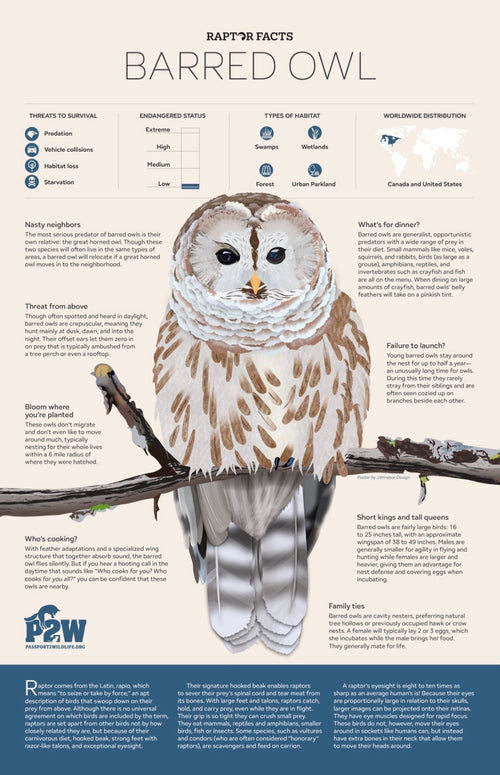
Barred Owl (Strix varia)
Job title: The Wet-Woods Communicator
Barred Owls are strongly tied to mature forests, especially near water—think swamp edges, creek corridors, and damp woods where sound carries and prey is active.
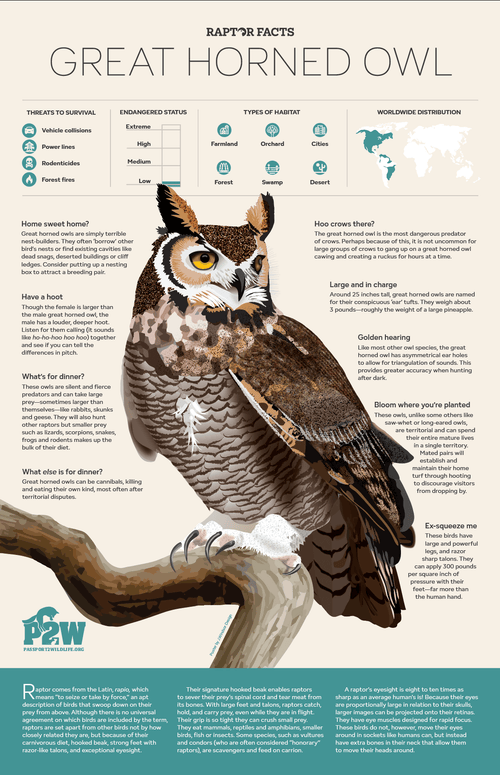
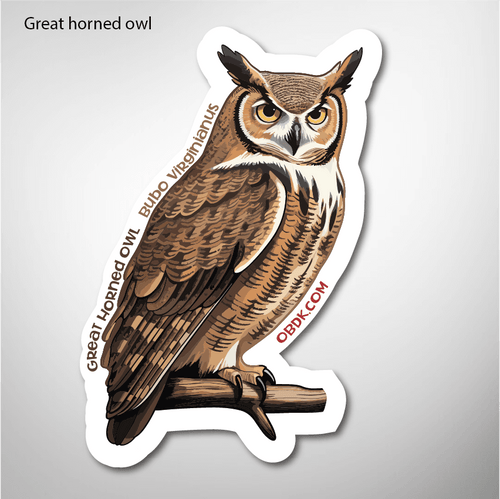
Great Horned Owl (Bubo virginianus)
Job title: The Versatile Apex Generalist
Great Horned Owls are famously adaptable. Forest edges, open woods, deserts, farmland, city parks—if there’s prey and a place to perch, they can make it work. They’re also among the most powerful owl predators in North America.
Strategy #1: Habitat
Barred Owl habitat: “Give me trees… and give me water.”
Barred Owls often favor:
- mature forest structure
- big trees and cavities
- wet edges (swamps, creeks, wetlands)
- shaded corridors where they can move and hunt quietly
Why it matters: their habitat tends to support a wide variety of prey (small mammals, birds, amphibians), and the forest structure offers nesting options like cavities or broken-top trees.
Great Horned Owl habitat: “I’ll work with what you’ve got.”
Great Horned Owls often use:
- forest edges and open woods
- mixed habitats (wood + field)
- cliffs, canyons, deserts
- agricultural areas and even urban greenspaces
Why it matters: their adaptability is part of the strategy. They can perch high, scan large areas, and hunt a broad set of prey across different habitat types.
Student-friendly takeaway:
Barred Owl = specialist leaning forest/wet
Great Horned Owl = generalist leaning “everywhere”
Strategy #2: Call Style
This is where students really latch on, because calls feel like personality.
Barred Owl: “Conversation energy”
Barred Owls are known for being vocal and responsive. They often call:
- dusk and early night
- sometimes pre-dawn
- in back-and-forth patterns (especially between pair members)
Teaching angle: Barred Owls are perfect for introducing the idea that calls are communication: contact, territory, coordination.
Great Horned Owl: “Deep and spaced”
Great Horned calls are typically:
- deeper
- slower
- spaced out
- more “announcement” than “conversation”
Teaching angle: Great Horned calls fit territory messaging—big presence, big claim.
Strategy #3: Nesting
Barred Owl nesting: “Cavity household”
Barred Owls often nest in:
- tree cavities
- broken-top trees
- large old trees
- sometimes old nests
Why it matters: Barred Owls are tied to habitat that provides those structures. If you lose the big trees, you lose the nest options.
Great Horned Owl nesting: “The takeover tenant”
Great Horned Owls often:
- use old hawk or crow nests
- take over existing platforms
- start early and focus energy on defense and feeding rather than construction
Why it matters: they’re efficient. If a sturdy nest already exists, they invest in guarding and raising chicks—especially valuable early in the season.
Student-friendly takeaway:
Barred Owl = needs cavities/old trees
Great Horned Owl = borrows big stick nests
Strategy #4: Prey
We can keep this accurate without overpromising a specific list: both owls are opportunistic, but their “usual” prey reflects habitat and power.
Barred Owl prey: “Forest and wet-edge menu”
Common themes:
- small mammals (mice, voles)
- birds
- amphibians in wetter systems
- occasionally fish or aquatic prey where available
Translation: their prey options reflect forest structure and water-adjacent habitats.
Great Horned Owl prey: “Broad and sometimes bigger”
Common themes:
- small mammals (mice, voles, rabbits)
- birds (including larger birds)
- a wider range overall due to size and strength
Translation: Great Horneds can take a wider variety, including larger prey, because they have the power and the habitat flexibility.
Important teaching note: prey varies by region and season. The key lesson is how habitat + size shape the likely menu.
Same Forest, Different Roles: How They Can Coexist
Here’s a great “ecology lens” line for March:
Even when these two owls overlap geographically, they often partition the landscape by:
- microhabitat (wet woods vs edge/open mix)
- nest structure (cavity vs borrowed nest)
- prey access (wet-edge prey vs broader prey field)
- hunting routes (corridors vs wide scanning perches)
That’s how “neighbors” avoid doing the exact same job.
Classroom Connection
Compare-and-Contrast CER: Which Owl Fits Which Habitat—and Why?
This is the cleanest way to turn the comparison into evidence-based writing.
Materials
- A simple habitat map with zones: mature forest, wetland edge/creek corridor, forest-field edge, open field, neighborhood park
- Species info cards (Barred vs Great Horned)
- Optional: poster visuals for each species (best)
Task
Students answer:
“Which owl fits each habitat zone best, and why?”
They must write one CER paragraph per habitat zone (or assign one zone per group).
CER Frame
Claim: “The best owl for habitat zone ___ is ___.”
Evidence: 3 facts (habitat preference, nesting style, call behavior, likely prey types).
Reasoning: Explain how those traits increase survival and hunting success in that habitat.
Confidence upgrade (teacher-friendly)
Have students rate confidence High/Medium/Low based on how strong the evidence is.
That teaches uncertainty without weakening the claim.
Pairing
This comparison lesson works best when students have visual anchors:
- Barred Owl poster (habitat + ID + behavior cues)
- Great Horned Owl poster (nest strategy + strength + habitat flexibility)
Use posters as “evidence boards” students must cite in their CER. It turns “I think” into “My evidence says.”
The Takeaway
Barred Owl and Great Horned Owl can share the same general forest, but they’re not competing for the exact same job.
One is tuned to mature woods and wet edges, with a call style that feels like conversation.
The other is a high-powered generalist, using borrowed nests and a wide prey range.
Same forest. Totally different job titles.
And that’s exactly the kind of comparison students remember—because it’s not just two species.
It’s two strategies for surviving the night.