
No Products in the Cart
Owl Pellets in Summer: The Backyard Science Activity Kids Actually Remember

Hook: summer science does not have to start with a worksheet.
It can start at the kitchen table, on a picnic bench, or under a shady porch with one small owl pellet and a big question:What happened here? Owl pellets are one of those rare activities that feel like a mystery, a nature walk, and a science lab all at once. For kids at home, summer camp, or homeschool co-op, they offer something especially valuable: a real object to investigate. Not a screen. Not a pretend dataset. A clue.
The Summer Science Secret Hiding in a Pellet
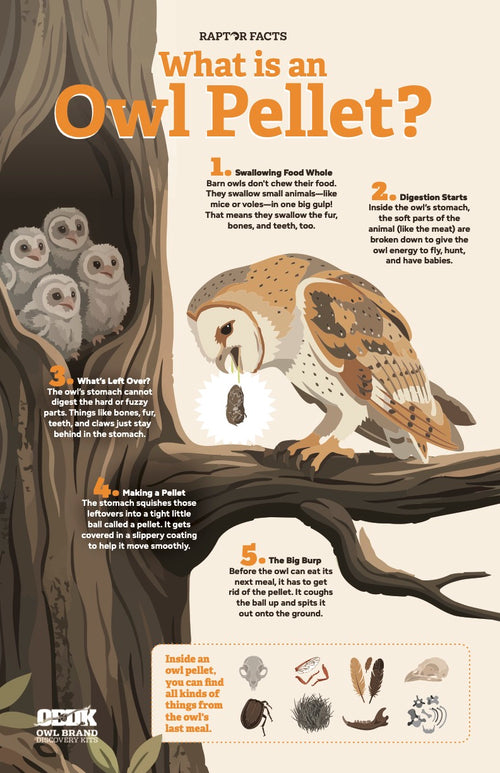
An owl pellet is made of the parts an owl cannot digest well, such as fur, feathers, and bones. After an owl eats, those materials are packed into a pellet and coughed back up later. That may sound odd at first, but to a young scientist, it is a perfect evidence bundle. A pellet can help kids ask:
What did this owl eat?
How many prey animals might be inside?
What bones can we identify?
What does this tell us about the habitat?
What do we still not know?
That last question matters. Owl pellets teach students that science is not just finding answers. It is learning how much evidence is enough.
Why Pellets Are Perfect for Summer
Summer learning works best when it feels open, hands-on, and a little surprising. Owl pellets fit that season beautifully.
Low prep: one pellet, a tray, toothpicks, and a simple bone chart can launch the lesson.
Flexible timing: it can be a 30-minute activity or a full afternoon project.
Indoor or outdoor: set up at a table, porch, campsite, or summer school station.
Mixed ages: younger kids can sort and observe; older kids can classify and graph.
Real science: students use evidence, not guessing, to build conclusions.
It also gives summer a little structure without making it feel like school. That is the sweet spot.
From Mystery to Food Web
At first, kids often focus on the bones. That is natural. Bones are exciting evidence. But the deeper lesson is the food web. A pellet can connect:
Owl: the predator at the center of the investigation.
Mouse or vole: common prey in many pellets.
Plants and seeds: food sources for many small mammals.
Field habitat: the place where the feeding story began.
Weather and season: factors that can shift prey movement.
Now the pellet is not just “what the owl ate.” It becomes a tiny map of energy moving through a summer landscape.
Fun Follow-Up Activities Kids Can Do at Home
Once the pellet is dissected, the lesson does not have to end. In fact, the best summer activities stretch into art, writing, mapping, and outdoor observation. Try one of these simple extensions:
Build a bone museum: sort bones by type and label them on a paper plate or cardboard tray.
Make a prey tally: count skulls, jaws, or leg bones to estimate prey animals.
Draw the food web: connect owl, prey, plants, seeds, insects, and habitat.
Write a field report: begin with “Our evidence suggests…”
Create an owl menu: list possible prey and compare high-energy vs low-energy meals.
Map the habitat: sketch where a barn owl might hunt near fields, barns, fences, or grass.
Make a nature journal page: include drawings, measurements, questions, and predictions.
For reluctant writers, the field report can be only three sentences. What did you find? What do you think it means? What else would you need to know?
The Evidence Rule: A Clue, Not a Rule
Pellets are powerful, but they should be taught carefully. One pellet cannot tell students everything about one owl, one habitat, or one season. It can suggest patterns. It can raise questions. It can show what was eaten before that pellet formed. That makes it a clue, not a rule. Help kids practice this kind of language:
Strong evidence: “We found two lower jaws, so at least one small mammal was eaten.”
Careful inference: “This owl may have hunted in a field habitat.”
Not enough evidence: “We cannot know the owl’s health from one pellet.”
Next question: “Would more pellets show the same pattern?”
That is real scientific thinking: notice → predict → look for more evidence.
Safety and Set-Up Without the Stress
Keep the activity simple and calm. Use pellets prepared for educational use, follow package directions, and have kids wash hands afterward. A basic summer set-up might include:
Tray or paper plate: keeps the investigation contained.
Toothpicks or wooden probes: gentle tools for separating material.
Tweezers: useful for small bones.
Bone chart: helps students compare shapes.
Notebook page: for tally marks, sketches, and questions.
Hand washing supplies: the final step in every lab.
If you are working with younger kids, focus on sorting shapes instead of naming every bone perfectly. Accuracy can grow with age.
Classroom Connection: Summer Pellet Detective Lab
This works well for home, camp, library programs, or a summer school science station.
Materials
Educational owl pellet
Tray or plate
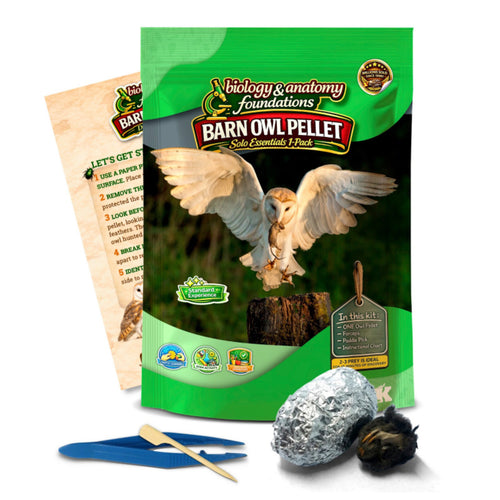
Toothpicks, tweezers, and bone chart (included in our products)
Science notebook or recording sheet
Colored pencils for food web drawing
Steps
Observe first: describe size, shape, color, and texture before opening.
Predict: ask, “What might be inside, and why?”
Dissect slowly: separate fur from bones without rushing.
Sort evidence: group skulls, jaws, ribs, leg bones, and unknown pieces.
Build a claim: write one sentence based on the evidence.
Draw the food web: connect the owl to prey and habitat.
Add a question: end with something the pellet does not answer.
Camp twist: let groups name themselves “field teams” and present one discovery to the group. Suddenly, a summer table becomes a wildlife lab.
The Takeaway
Owl pellets are a perfect summer activity because they turn curiosity into evidence. Kids get to sort, count, sketch, predict, and revise their thinking. They learn that one small pellet can open a much larger story: predator, prey, plants, habitat, and energy all connected. And maybe best of all?
They learn to ask the kind of question every young naturalist needs: What does the evidence show — and what should we look for next?