
No Products in the Cart
March Field Signs: Pellets, Whitewash, and the Roost Understory

Before you see an owl, you can find the paperwork.
March is a funny month for owl-watching.
The trees are still half-asleep, the light is changing fast, and owls are suddenly everywhere—except, of course, where you’re looking.
That’s because owls are masters of the invisible shift. They don’t advertise with feathers and fanfare. They leave evidence.
And in March, that evidence often gets easier to spot: snow melts back, leaf litter loosens, and roost sites start showing their “understory”—the quiet layer of clues beneath a favorite perch.
This is your reminder that you don’t have to see an owl to teach owls.
You just need to read what’s under them.
The Roost Understory: What You’re Actually Looking At
A roost is a regular resting place—often used during the day, sometimes at night between hunts. Think: “owl chair.”
Under an active roost, you may find a cluster of signs because the owl returns to the same perch repeatedly.
The three most common “paperwork items” are:
- Pellets (the diet receipts)
- Whitewash (the splatter signature)
- Feathers (the occasional loose page)
They don’t always appear together, and they don’t always appear in neat piles. But once students learn the pattern, they’ll start noticing owls where they never noticed them before.
Pellet Clues: The Evidence Packet
Owl pellets are made of what the owl can’t digest—fur, bones, teeth, feathers, and insect bits—compressed and regurgitated.
What pellets tell you
- An owl has been here (usually a repeated perch, not a one-off flyover)
- What the owl ate (and what prey lives in that habitat)
- Food web connections (predator → prey → habitat)
Where pellets show up in March
- under barn beams, rafters, and ledges (Barn Owl classic)
- under a favorite tree limb near an open field edge
- beneath dense evergreens that offer daytime cover
- below a repeated perch at the edge of woods and meadow
Teacher-friendly note: pellets can be present from earlier months and revealed as snow melts. That’s not “old evidence.” That’s a perfect lesson about how clues persist.
Whitewash: The Owl’s Unmistakable Autograph
“Whitewash” is the chalky white droppings birds leave beneath a perch. Under roosts, it often appears as:
- splashes on the ground
- streaks on rocks
- marks on bark
- sometimes a “spray pattern” under beams or ledges
What whitewash tells you
- A perch is being used repeatedly
- Where to look for pellets (whitewash is the arrow pointing to the evidence)
If pellets are the paperwork, whitewash is the sticky note that says: “Start here.”
Repeat Perches: The Map, Not Just the Clue
A repeat perch is a location an owl returns to because it works:
- good cover
- a clear flight path
- a view of hunting lanes
- low disturbance
- predictable prey routes
In March, owls may become more consistent about territory and routines, which can make these repeat sites easier to infer—especially in edge habitats.
Roost vs Nest: A Respect Note Worth Saying Clearly
This matters in March, because nesting season is either beginning or close.
A roost is not a nest
- Roost: a resting spot (often daytime)
- Nest: the place where eggs/owlets are raised
Roost evidence can be observed from a safe distance, and it’s often a great starting point for lessons. Nests are different. Nests require extra care.
The rule for students (simple, solid)
- We can observe evidence.
- We do not approach or disturb nesting areas.
- We keep wildlife safe by keeping space.
That’s not just ethics—it’s science. Disturbance can cause nest failure, and the goal is learning without impact.
March Field Signs by Owl “Style” (Quick Patterns Students Remember)
These aren’t guarantees, but they’re useful teaching anchors:
Barn Owl
- often linked to barns, silos, rafters, and nest boxes
- evidence may cluster beneath beams or ledges
- strong connection to field-edge rodent habitat
Barred Owl
- often tied to mature woods and wet edges
- roosts can be in dense cover; pellets often under tree limbs
Great Horned Owl
- uses big perches and old nests
- may roost in large trees along edges; pellets can appear under prominent limbs
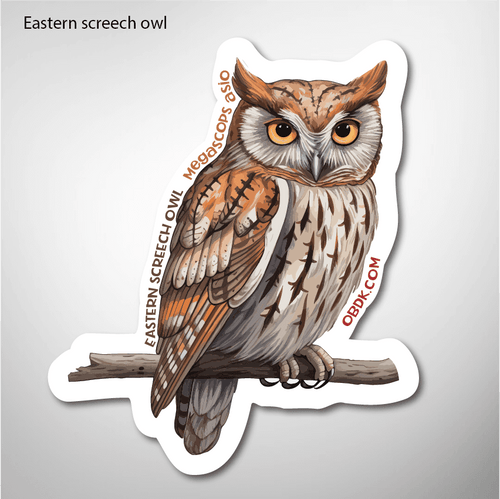
Screech-Owl
- small and cavity-oriented
- evidence can be subtle; pellets are smaller and may show under cavity trees or nearby perches
Classroom Connection
Evidence vs Inference Lab: “What’s Here and How Sure Are You?”
This turns field signs into real scientific thinking in 20–30 minutes.
Materials
- “Evidence cards” (photos or drawings): pellet, whitewash, feather, tracks, nest box, old hawk nest, etc.
- A simple recording sheet with three columns:
- Observation
- Inference
- Confidence (High / Medium / Low)
How it works
- Students rotate through stations (or you project one card at a time).
- For each card, they write:
- Observation: what they can directly see
- Inference: what they think it suggests
- Confidence: how sure they are, and why
Example
- Observation: “I see a pellet under a tree limb.”
- Inference: “An owl used this perch.”
- Confidence: Medium (needs more evidence like whitewash or multiple pellets)
The scientist sentence frame (gold for writing)
“I observe ____. This may suggest ____ because ____. My confidence is ____.”
Extension (optional)
Add one “trick” card: something that looks like a pellet but isn’t (or whitewash from another bird). Students learn that field science is careful science.
Turn Roost Evidence Into a Food Web Lesson
This is where the pairing becomes powerful:
- Owl pellets = the diet evidence
- Prey ID chart/poster = consistent identification and vocabulary
- Together = a class-built food web model that connects habitat to prey to predator
A simple sequence that works:
- Read the roost signs (paperwork)
- Dissect pellets (proof)
- Build a habitat-based food web (story)
The Takeaway
March is when the landscape starts giving up secrets.
Owls may stay hidden, but their paperwork doesn’t.
Teach students to look under the perch, read the signs, and separate what they see from what they infer—with confidence levels like real field scientists.
Because before you see an owl…
you can find the evidence that says it was there.