
No Products in the Cart
Do Owls Migrate

Hook
Some owls migrate like clockwork. Most don’t. And a few do the owl version of “I’ll go wherever the food is” and make it everyone’s problem.
If you’ve ever wondered why you see one owl every winter and another owl seems to vanish after fall, you’re asking a real ecology question:
Are owls migrating, or are they just moving around?
The short answer is: both but not always in the way people mean “migration.”
Let’s break it down in a teacher-friendly way.
First, the big distinction: Migration vs Dispersal vs Irruption
Owls get mislabeled as “migrating” when they’re actually doing one of these:
Migration
A regular, seasonal movement between breeding and non-breeding areas. Predictable direction and timing.
Dispersal
A one-way move (often young birds) leaving the birthplace to find their own territory. Not seasonal, not a round trip.
Irruption
A sudden, irregular movement (often southward) triggered by food shortages or prey cycles. This is the “why are snowy owls everywhere this year?” event.
Most owl movement confusion comes from mixing these three.
Why most owls don’t migrate
Many owls are territorial and built to hunt in winter. If they can still catch prey, staying home is efficient.
Owls that often stay put (or mostly stay put) include:
- Great Horned Owl
- Barred Owl
- Eastern Screech-Owl
- Barn Owl (many populations are resident, though movements can vary regionally)
These owls can hunt year-round and keep territories that provide consistent prey and nesting options.
Teacher-friendly line:
If the food doesn’t leave, the owl doesn’t have to.
So why do some owls migrate
When an owl’s food supply is seasonal, patchy, or snow-blocked, movement makes sense.
Owls are basically energy accountants. If staying costs more calories than moving, they move.
Common drivers:
1) Food availability
If prey numbers drop or shift location, owls follow.
2) Snow depth and access
Deep snow can hide rodents in the under-snow world. Some owls can still hunt that, but others rely more on open ground or visible prey.
3) Habitat seasonality
Owls tied to open grasslands, marshes, or insect-rich forests may have to relocate when those habitats “turn off” in winter.
4) Competition
In harsh seasons, dominant resident owls may hold prime territory, pushing other owls (especially young birds) into new areas.
Which owls are most likely to migrate (or move seasonally)
Here are the species that more commonly fit the “migratory or highly mobile” category.
Short-eared Owl
Often one of the best examples of seasonal movement. They follow open habitats and prey and can shift a lot from season to season.
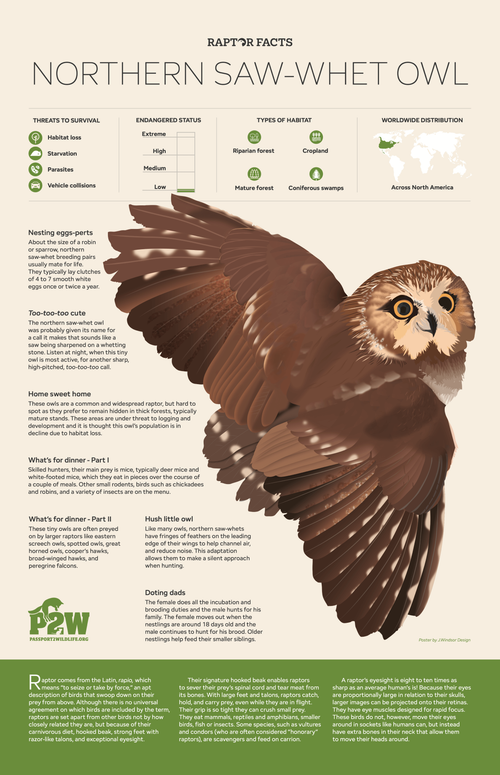
Northern Saw-whet Owl
Many migrate at night, especially in fall, and can be quite mobile even though they’re small and secretive.
Long-eared Owl
Can be migratory or partially migratory depending on region. Some populations shift to winter roost areas.
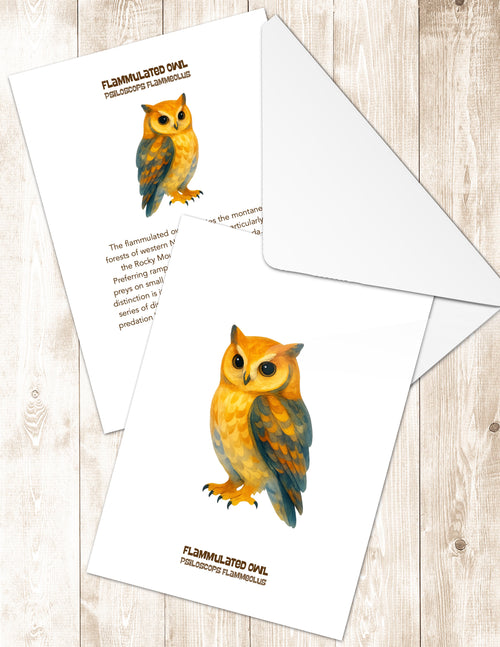
Flammulated Owl
More clearly migratory. Insect-based diet means winter is a tough time to stay in cold forests with low insect availability.
Burrowing Owl
Often migratory in many parts of its range, again strongly tied to habitat and prey availability.
Snowy Owl
The famous “it depends” owl. Snowy owls don’t migrate in a neat, predictable way like geese. They can be nomadic and irruptive, moving based on prey cycles (especially lemmings) and conditions.
Translation:
Snowy owls don’t always follow a calendar. They follow food geography.
What about “owl migration” you see in your town
If you “lose” owls in winter, it could be:
- true migration
- a shift to different hunting zones (still local, just elsewhere)
- young dispersal
- a change in calling behavior (less vocal doesn’t mean absent)
- the owl switching roost sites to better cover
Owls can be present and simply harder to detect.
A simple way to teach it: Owls migrate when the habitat stops paying them
Migration isn’t a personality trait. It’s a strategy.
Resident strategy: “I can hunt here all year.”
Migratory strategy: “This place shuts down seasonally.”
Irruptive strategy: “Food crashed. I’m leaving now.”
That framework helps students stop thinking “migrate = bird thing” and start thinking “migration = decision under pressure.”
Classroom Connection
Activity: Owl Movement Decision Map (Migration vs Dispersal vs Irruption)
Goal: Students classify movements and defend the “why.”
Materials
- 3 category cards: Migration, Dispersal, Irruption
- Owl species cards (Great Horned, Barred, Barn, Short-eared, Saw-whet, Snowy)
- Scenario cards (deep snow, vole boom, lemming crash, habitat loss, mild winter)
Steps
- Groups choose an owl species card.
- Draw a scenario card.
- Decide: stay put, migrate, disperse, or irrupt.
- Write a mini CER:
- Claim: “This owl would most likely ____.”
- Evidence: prey type + habitat + winter access
- Reasoning: energy budget logic (“staying costs more/less than moving”)
- Limitation: “This can vary by region and year.”
Teacher win: Students learn that good science includes uncertainty.
Product Pairing
This topic is strongest when students can compare species side-by-side:
- Owl posters for habitat + diet + range anchors
- “Night Notes” journaling prompt to log seasonal observations and movement hypotheses
The Takeaway
Do owls migrate?
Some do. Many don’t. And the owls that “surprise migrate” are often responding to one thing:
food access.
Owls move when the landscape changes the rules when prey shifts, snow blocks access, or habitats turn off seasonally.
And once students learn the difference between migration, dispersal, and irruption, they start seeing owls not as mysterious disappearing birds…
but as strategic predators solving a seasonal puzzle.