
No Products in the Cart
Bats in Spring

Hook: Spring is when bats go from survival mode to “okay, we need food, warmth, and a plan.”
Spring is the reset button for bats. Winter was about making it through. Spring is about rebuilding.
Depending on the species and where you live, spring means one of two big stories (and sometimes a mix of both): hibernators waking up or migrators returning.
Either way, spring bat life is a careful balancing act between cold nights, limited insects, and the urgent need to refuel.
What Spring Looks Like for a Bat
If you’re imagining bats bursting out of caves like a celebration, spring is more subtle.
Spring is:
- cold snaps that still show up uninvited
- insects returning slowly, not all at once
- nights that are longer than summer, but warming
- a body that needs fuel after months of low activity
For bats, spring isn’t just “warmer.” It’s a season of timing.
Two Spring Bat Paths
1) Waking up from hibernation
Many bats spend winter in hibernation (often in caves, mines, or other protected places called hibernacula). In spring, they begin to rouse more often and eventually leave.
What they need immediately:
- water (rehydration)
- food (early insects)
- safe roosts that help them stay warm between flights
And here’s the tricky part: early spring can be a rough deal. Some nights are warm enough to fly, but insects can still be scarce. That’s why bats are so closely tied to places that “turn on” early with insect life.
2) Returning from migration
Some bat species migrate to warmer regions for winter and return in spring. The spring priority list looks similar: refuel, find roosts, and set up the next phase of life.
In both cases, spring is about one word: recovery.
Spring Feeding “The First Buffet”
Bats eat insects, and spring insects don’t arrive as one big wave. Early season insect activity often concentrates in:
- wetlands and pond edges
- stream corridors
- forest edges
- south-facing slopes that warm first
- areas near lights (which attract insects, though that comes with tradeoffs)
This is why bats often appear around water at dusk in spring. They’re not being dramatic. They’re being practical.
The Big Spring Event Maternity Season
For many bat species, spring also launches the start of maternity season.
Female bats gather in maternity colonies where warmth and shelter help pups develop. These colonies may form in:
- tree cavities or under bark
- warm attic spaces (human structures can mimic natural warm roosts)
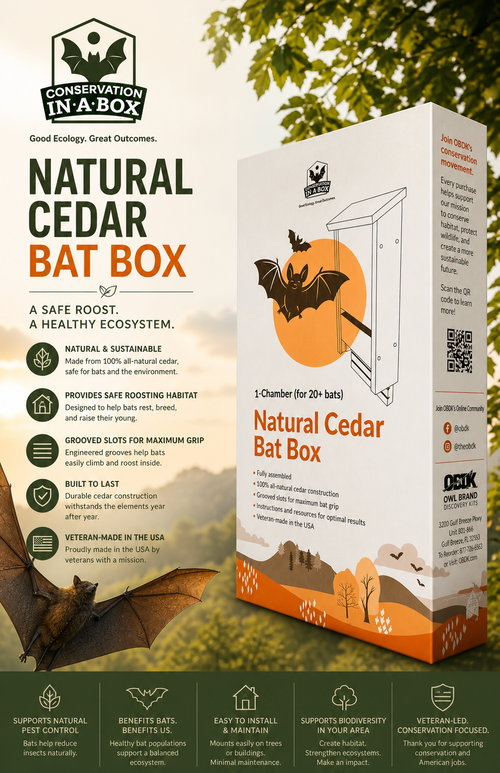
- bat houses
- rock crevices
This is one of the most important spring concepts for students: bats are not just “individual animals.” In spring, they become a community strategy.
Warmth matters because growing pups need stable temperatures. A warm roost can be the difference between a pup developing on schedule or falling behind.
Why Spring Timing Matters So Much
Spring is the narrow bridge between winter survival and summer success.
A bat that wakes up too early can face cold nights and low insects. A bat that wakes up too late misses the best early feeding opportunities and the maternity timeline.
So spring is a season of careful risk management:
- fly when it’s worth the energy
- roost warm when it’s not
- chase insects where they concentrate
- choose roost sites that support reproduction
A Quick “What You Might Notice” List (Teacher-Friendly)
- bats showing up earlier on warm evenings and disappearing again after cold snaps
- increased bat activity near water at dusk
- bat “commuter routes” along edges and tree lines
- local reports of bats returning to known roosts or bat houses
Respect Note for Spring
Spring is a sensitive time. Disturbing bats in roosts can cost them energy they need for recovery and reproduction. If you have bats in a structure, it’s better to learn what species might be present and follow local guidance on timing and humane exclusion practices.
Classroom Connection
Activity: Spring Energy Budget “Can You Afford to Fly Tonight?”
Goal: Help students understand why bats don’t just “come out” every night in spring.
Materials:
- a simple point system (energy points)
- weather cards (warm night, cold night, windy night, rainy night)
- insect cards (low, medium, high)
- roost cards (warm roost, cool roost)
How it works:
- Each student group starts with a limited energy budget (because winter recovery isn’t free).
- They draw a weather card and an insect card.
- They decide: fly or stay roosted.
- If they fly, they spend energy but may gain energy depending on insect availability.
- If they stay, they conserve energy, but risk missing feeding opportunities.
- After several rounds, students reflect: which conditions made flying worthwhile?
CER prompt: “Spring conditions affect bat behavior because ____ changes ____ (insect availability/energy cost), which leads bats to ____.”
This teaches seasonality, behavior, and survival strategy without needing a live animal or a field trip.
The Takeaway
Spring bats are not spooky. They’re strategic.
Spring is when bats:
- wake up or return
- refuel carefully
- form maternity colonies
- and start the long climb toward summer abundance
If you want a one-line student version: Spring is when bats go from “make it through winter” to “build the next generation.”