
No Products in the Cart
Wolves in Snow: The Quiet Teamwork Kids Don’t Expect

Snow Makes Wolves Look Like Shadows (That’s the Point)
In winter, wolves don’t announce themselves.
They don’t need to.
They move like a line of punctuation across a white page—quiet, direct, and strangely intentional. If students expect wolves to be nonstop action, snow is where the surprise happens:
Winter wolves are strategy wolves.
Because deep snow doesn’t just slow prey down.
It slows everyone down.
And in that kind of landscape, teamwork isn’t a “nice trait.” It’s survival math.
Winter Is Expensive—So Wolves Spend Energy Like It Matters
Winter hunting is not just “find prey, chase prey.”
It’s:
- find prey without wasting miles
- choose prey that’s actually catchable
- avoid injury
- keep the pack fed
- do it again tomorrow
That’s why winter wolf behavior is such a powerful lesson for kids: it’s a real-world example of planning, cooperation, and decision-making under pressure.
Wolves don’t win winter by being the fastest every time.
They win by being smart together.
What “Quiet Teamwork” Looks Like in a Wolf Pack
1) Travel as a Team (and Why It Matters in Snow)
If you’ve ever seen a single-file wolf trail, you’ve seen teamwork without a word.
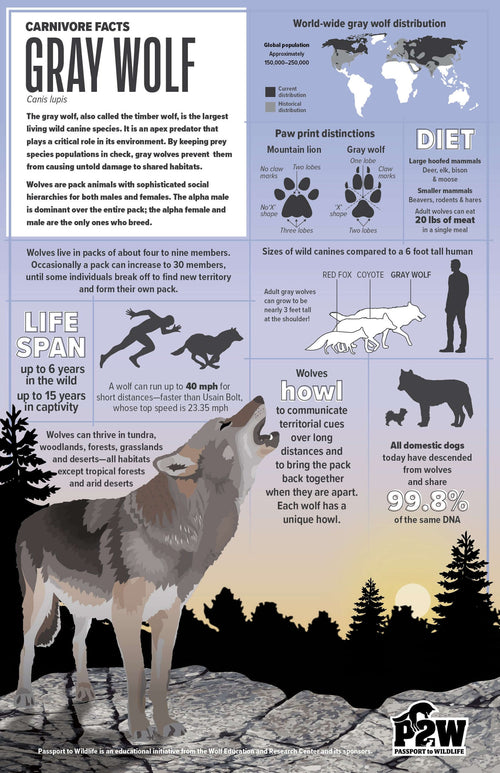
Wolves often travel in a line because it saves energy:
- the first wolf breaks trail
- others step in the packed footprints
- the pack can move farther with less cost
Students instantly understand this when you compare it to walking in deep snow: one person makes a path, everyone else follows.
2) Roles Shift, But the Goal Stays the Same
Wolf packs aren’t a rigid “job chart,” but they do show coordinated behavior:
- some individuals may test or pressure prey movement
- others may position to cut off escape routes
- the pack adjusts based on terrain (trees, slopes, drifts)
The big idea for kids:
Wolves don’t hunt as one animal. They hunt as a system.
3) They Don’t Chase Everything
Here’s an important winter truth: chasing costs calories.
So wolves often choose opportunities that make sense:
- weak, injured, or isolated prey
- prey in deeper snow where movement is harder
- locations where the pack has an advantage (edges, open lanes, trapped routes)
That can lead to a great classroom conversation:
“Just because you can chase doesn’t mean you should.”
4) Communication Isn’t Always Loud
Yes, wolves howl—but winter teamwork is often quiet and close-range:
- body position
- timing
- spacing
- subtle shifts as the pack moves
This is why “wolf teamwork” surprises kids: it’s less like a movie chase scene and more like a well-practiced group project in the wild.
Snow Tracking: The Story Wolves Leave Behind
Snow turns wolves into readable evidence.
When students learn to look for patterns, they stop thinking of tracks as “footprints” and start reading them as behavior:
What to look for
- Single-file trail: energy-saving travel and coordinated movement
- Direct, purposeful line: wolves often conserve energy by moving efficiently
- Changes in pace/spacing: a shift from travel to alertness or pursuit
- Multiple tracks fanning out then reconverging: searching, regrouping, or maneuvering
The lesson hiding in the trail
A wolf track line is often a map of choices:
- where it’s safer to travel
- where prey might be
- where energy can be saved
Snow doesn’t just show you “wolves were here.”
It shows you how wolves solved winter today.
Fun Fact
Wolf paws function like natural snowshoes: wide, furred feet help distribute weight and improve traction. That doesn’t make deep snow “easy,” but it changes the math—and it’s one reason wolves can travel long distances in winter landscapes.
Classroom Connection: Venn Diagram — Wolf Pack Winter vs Human Family Winter
This is one of those activities that quietly delivers big science thinking, because it connects ecology to students’ lived experience.
Prompt
How is a wolf pack’s winter strategy similar to a human family’s winter strategy? How is it different?
Set up your Venn diagram
Label:
- Wolf Pack Winter
- Human Family Winter
- Both
Starter ideas (give students a few to spark thinking)
Wolf Pack
- travel in a line to save energy
- hunt cooperatively
- rely on natural insulation (fur)
- communicate through body language and vocalizations
- choose routes and timing to conserve calories
Human Family
- use clothing/heat for insulation
- plan grocery trips and budgets
- use vehicles/roads for travel efficiency
- rely on tools and shelters
- schedule changes (shorter days, indoor routines)
Both
- conserve energy in cold
- plan ahead
- protect younger members
- use teamwork to meet needs
- adapt behavior based on weather
Make it science (not just social studies)
Require students to add:
- 1 adaptation (physical or behavioral)
- 1 energy-saving strategy
- 1 example of communication
Writing Prompt: “A Winter Strategy Meeting”
Give students a role and let them write with evidence:
Option A: Wolf POV
You are the lead wolf on a deep-snow night.
Write a “strategy note” to your pack: where you’ll travel, what you’ll avoid, and how you’ll work together.
Option B: Scientist POV
You found a single-file trail and a cluster of tracks near the tree line.
Write a short field report explaining what might have happened—using track evidence.
Option C: Compare & Connect
What can humans learn from wolf winter strategy?
(Planning, efficiency, teamwork, risk management.)
Winter Unit Tie-In Visuals
This lesson lands better when students can see the patterns they’re discussing:
- track diagrams (single-file travel vs scattered)
- predator/prey visuals
- winter habitat maps (edges, open lanes, cover)
Use visuals as:
- your “evidence wall” for track story debates
- reference support during writing
- quick warm-ups: “What do you notice? What do you infer?”
Teacher Takeaway
Wolves in snow are not just “predators.”
They’re planners.
They’re energy managers.
They’re a living example of how winter rewards cooperation and smart choices.
And when kids realize that, the lesson gets bigger than wolves:
Teamwork isn’t just something we teach.
It’s something nature proves.