
No Products in the Cart
Why Are Polar Bears and Grizzly Bears So Much Bigger Than Other Bears?

Hook: polar bears and grizzly bears are built like living fortresses.
Some bears look like they were designed by nature with the setting turned all the way up.
A black bear is impressive. A sun bear is strong for its size. A sloth bear is no joke.
But then there are polar bears and grizzly bears.
These are the giants. The heavyweight division. The bears that make students stop and ask, “Wait… how big can a bear actually get?”
The answer: very big.
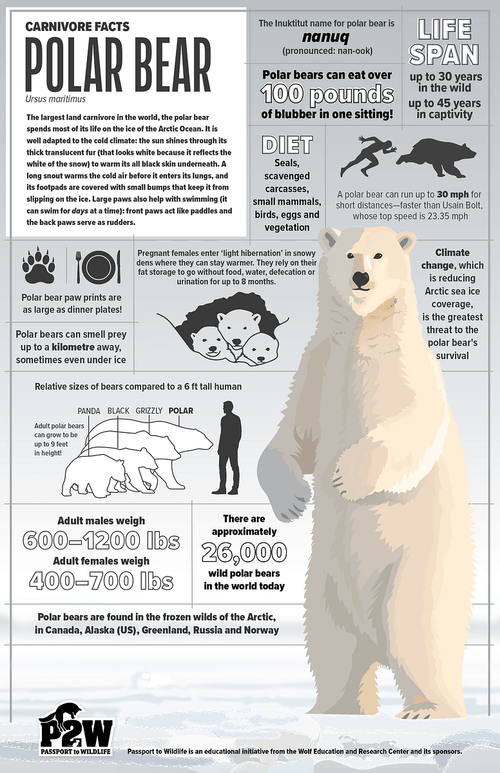
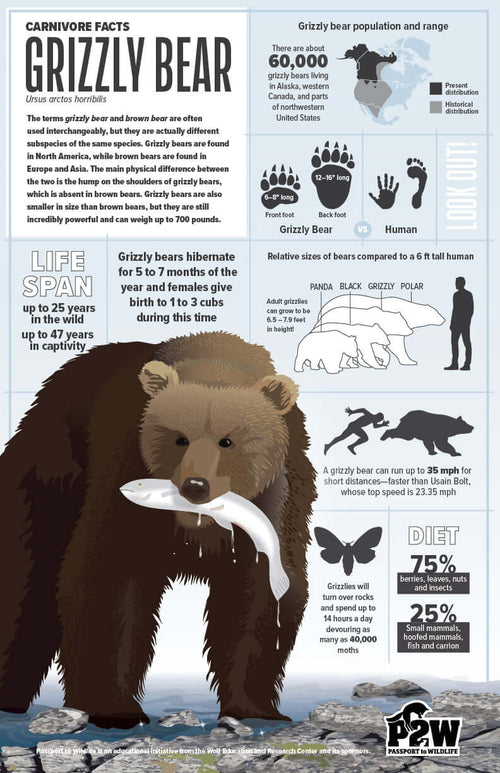
A large male polar bear can weigh over 1,000 pounds, and some can reach more than 1,700 pounds. Alaska Department of Fish and Game describes adult male polar bears as averaging 600–1,200 pounds and measuring 8–10 feet in length, with the largest males exceeding 1,700 pounds. Grizzly bears are smaller than polar bears on average, but still huge. In the lower 48 states, adult male grizzlies average about 400–600 pounds, while females average 250–350 pounds, according to the U.S. Fish and Wildlife Service.
So why did these two bears get so big?
The short answer: food, cold, space, competition, and survival pressure.
The better answer is even more interesting.
How Much Bigger Are They?
Let’s put bear size into perspective.
There are eight living bear species, and they do not all play in the same weight class. The smallest living bear is the sun bear, with adult males around 60–110 pounds, according to the North American Bear Center’s species summary. Compare that to a male polar bear at 600–1,200 pounds on average, and you are looking at a bear that can be roughly 10 times heavier than a small sun bear.
Here is a classroom-friendly comparison:
| Bear Type | Typical Adult Male Weight | Size Category |
|---|---|---|
| Sun Bear | About 60–110 lb | Smallest living bear |
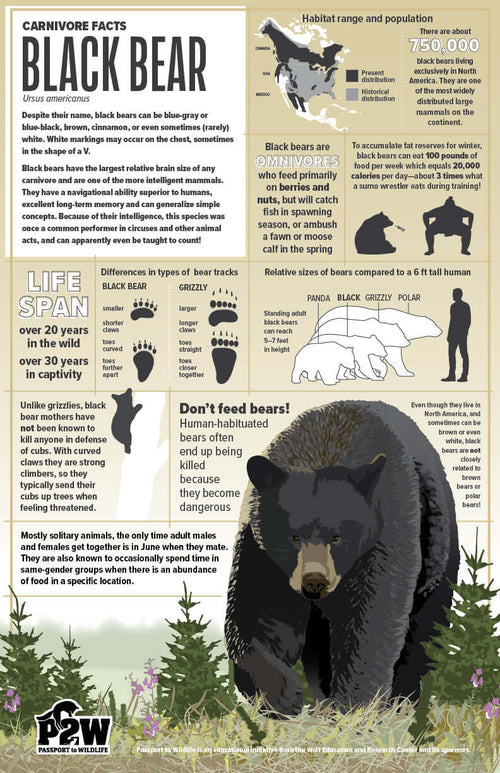
| American Black Bear | Often around 130–660 lb, varies widely | Medium bear |
| Grizzly Bear | About 400–600 lb in the lower 48 states | Large bear |
| Coastal Brown / Kodiak-type Bears | Often larger than inland grizzlies | Giant brown bears |
| Polar Bear | About 600–1,200 lb average male range | Largest bear species |
One important note: “grizzly bear” and “brown bear” can be confusing. Grizzlies are a North American form of brown bear. Coastal brown bears, including Kodiak bears, can get much bigger than many inland grizzlies because they often have access to richer food like salmon. The Library of Congress notes that the largest bear question often comes down to polar bear vs. Kodiak brown bear, with polar bears and Kodiak bears both reaching enormous sizes.
So if students ask, “Who is biggest?” the safest answer is:
Polar bears are usually considered the largest bear species overall, while Kodiak/coastal brown bears can rival them closely.
Reason 1: Cold Rewards Big Bodies
Polar bears and many grizzlies live in cold or seasonal environments, and cold changes the rules.
Big bodies hold heat better than small bodies. This follows a classic biology idea: larger animals have less surface area compared with their volume, which helps them lose heat more slowly. In plain classroom language:
A big body is harder to cool down.
That matters in the Arctic. Polar bears live on sea ice, swim in freezing water, and hunt in one of the harshest environments on Earth. Their large bodies help conserve heat, while thick fat and dense fur add insulation. Alaska Department of Fish and Game notes that polar bears have water-repellent hair, a dense undercoat, large feet for swimming and walking on thin ice, and furred foot bottoms.
Grizzlies also benefit from size in colder or highly seasonal landscapes. They need to survive long winters and build fat before denning. A bigger bear can store more energy, which matters when food disappears or becomes harder to find.
In warm tropical forests, being massive is not always helpful. That is one reason sun bears, which live in Southeast Asian tropical forests, are much smaller. They do not need a polar-bear-sized body to survive Arctic cold. Their world rewards climbing, agility, and moving through dense forest more than carrying a giant heat-saving body.
Reason 2: Rich Food Builds Giant Bears
Big bears need big calories.
Polar bears are huge because their main prey is also rich: seals. Seal fat is one of the most energy-dense foods available in the Arctic. A successful polar bear does not just eat meat; it eats blubber, which is basically survival fuel. That kind of high-fat diet can support a much larger body than a diet based mostly on insects, fruit, or scattered plant foods.
Grizzlies are omnivores, which means they eat many things: roots, berries, grasses, insects, carrion, fish, and mammals. But the biggest brown bears tend to live where food is especially rich and predictable. Coastal brown bears with salmon access can become much larger than inland bears. The grizzly search results from Alaska Peninsula populations show coastal grizzlies can be much heavier than northern interior populations, with large coastal males averaging far above smaller inland bears.
That is the bear rule students should remember:
Food shapes size.
A bear living near salmon streams has a very different energy budget than a bear scraping through dry country on roots, insects, and occasional meat.
Reason 3: Their Habitats Give Them Room to Be Big
A giant body needs space.
Polar bears travel across sea ice, coastlines, and ocean edges. They may cover huge distances looking for seals, mates, denning areas, or stable ice. Their long bodies, large paws, and powerful build are part of a life built around distance, swimming, and hunting on ice.
Grizzlies also use large home ranges, especially where food is spread out. A big male may roam widely to find mates and food. Size can help in conflicts with other bears, competition over carcasses, and dominance at rich feeding sites.
Now compare that with smaller bears in dense forests. A sun bear or sloth bear does not need to dominate open ice or salmon rivers. Smaller size can help with climbing, maneuvering through vegetation, raiding insect nests, and using smaller food patches.
So the question is not, “Why didn’t every bear become huge?”
The better question is:
Would being huge actually help in that bear’s habitat?
For many bears, the answer is no.
Reason 4: Big Bears Can Win More Contests
In the bear world, size can mean power.
A large male bear may have advantages in:
- Competing for mates
- Defending food sources
- Dominating carcasses
- Surviving fights
- Intimidating rivals
- Storing more fat before winter
This does not mean every big bear wins every situation. A smaller bear can be faster, more agile, or better suited to a certain habitat. But among polar bears and brown bears, body size can strongly influence competition.
Male polar bears are especially large compared with females. Polar bears show strong sexual size differences, with adult males much heavier than females; Alaska Department of Fish and Game lists adult females at about 400–700 pounds, compared with adult males at 600–1,200 pounds on average.
That size gap tells students something important: in many mammals, including bears, male competition can help drive larger body size over evolutionary time.
Reason 5: Fat Is Not Extra — It Is Survival Gear
For polar bears and grizzlies, fat is not just stored food. It is insulation, emergency fuel, and reproductive support.
Polar bears depend on fat to survive periods when hunting is difficult. Grizzlies must build fat before winter denning. Female bears also need stored energy for pregnancy and nursing cubs. In both species, body condition can shape survival and reproduction.
This is why “big” does not just mean “strong.”
It means:
- More stored energy
- More cold protection
- More fasting ability
- More reproductive support
- More survival buffer during food shortages
A small bear can be perfectly adapted to its own habitat. But in polar and grizzly worlds, carrying a large body and large fat reserves can be the difference between making it through the hard season and not.
Why Other Bears Are Smaller
Other bear species are not smaller because they are “less evolved.” They are smaller because they solved different survival problems.
A sun bear lives in tropical forests and eats fruit, insects, honey, and small animals. Its smaller body helps it climb and move through trees. The North American Bear Center describes sun bears as the smallest living bears, with adult males weighing around 60–110 pounds.
Black bears are flexible generalists. They can live in forests, mountains, swamps, and suburbs. Their size varies widely, but they usually do not need polar-bear-level bulk because they are not specializing in Arctic seal hunting.
Sloth bears have long claws and specialized feeding habits for termites and ants. Giant pandas are built around a bamboo-heavy diet. Spectacled bears live in Andean forests and mountains, where climbing and plant feeding matter.
Different bear, different problem.
Different problem, different body.
Classroom Connection: Build the Right Bear
Turn bear size into an adaptation design challenge.
Give students four habitat cards:
- Arctic Sea Ice
- Salmon River Coast
- Tropical Forest
- Mountain Forest
Then give them adaptation cards:
- Huge body
- Thick fat layer
- Long claws
- Large paws
- Strong climbing ability
- Shorter body
- Powerful smell
- High-fat diet
- Flexible omnivore diet
- Dense fur
- Fast movement through trees
Students must “build” the best bear for each habitat. They choose five adaptations and explain why those traits fit the environment.
Example:
Arctic Sea Ice Bear: huge body, thick fat layer, large paws, dense fur, high-fat diet.
Why: This bear needs to stay warm, walk on ice, swim, and survive on seal fat.
Tropical Forest Bear: smaller body, strong climbing ability, long claws, flexible diet, powerful smell.
Why: This bear needs to move through trees, find insects and fruit, and avoid overheating.
Then ask the big question:
Would a polar bear body work in a tropical forest? Would a sun bear body work on Arctic ice? Why not?
That is where students see that size is not about being “better.” It is about being built for the job.
Teacher Takeaway
Polar bears and grizzly bears are bigger than most other bears because their worlds reward size.
Polar bears are built for Arctic cold, seal hunting, swimming, and long-distance travel across ice. Grizzlies and coastal brown bears can grow huge where rich food sources, seasonal fat storage, and competition favor large bodies.
But smaller bears are not “worse.” They are built for different jobs. A sun bear does not need to be a 1,000-pound ice hunter. A polar bear does.
The big classroom idea is simple:
Big bodies are not random. They are answers to survival problems.
For polar bears and grizzlies, the problem is cold, calories, competition, and survival through hard seasons.
And nature’s answer was: build the bear bigger.