
No Products in the Cart
Silent Flight Isn’t Magic—It’s Engineering

Why owls are the stealth aircraft of the forest (and how to prove it in your classroom)
If you’ve ever watched an owl cross a moonlit yard, you know the feeling: it’s there… and then it’s gone—no wingbeats, no rush of air, no warning.
Most birds announce themselves when they fly.
Owls don’t.
And the reason isn’t mystery. It’s design.
Owls are basically flying experiments in noise control—built to hunt by surprise, in a world where prey survives by hearing danger coming.
The Hook: Silence Is an Advantage You Can Eat With
For an owl, hunting is a physics problem:
- If prey hears you, it runs.
- If prey doesn’t hear you, you eat.
So owls evolved wings that don’t just lift their bodies—
they manage air in a quieter way.
That’s the big idea students love:
silent flight is an adaptation.
Not for beauty. Not for drama.
For dinner.
The Problem Most Birds Have: Air Gets Loud
When a bird flaps, it’s pushing air around. And fast-moving air can create:
- turbulence (messy airflow)
- vibrations
- whooshing noise
That noise comes from the same place a lot of mechanical noise comes from:
rough movement through air + hard edges + turbulence.
Owls solve that with feather features that behave like built-in sound dampeners.
The Owl Engineering: Three “Quiet” Features That Work Together
1) The “Comb” Edge (Leading-Edge Serrations)
On many owls, the front edge of the wing has tiny comb-like structures. Think of it like a fine-toothed zipper on the wing.
What it does:
It helps break incoming air into smaller, smoother streams—reducing the big, noisy turbulence that creates that classic “flap” sound.
Student translation:
Instead of one big splash of air, the wing makes lots of tiny ripples.
2) The Velvet Wing Surface (Soft Feather Texture)
Owl feathers often feel unusually soft compared with many other birds.
What it does:
That plush texture helps absorb tiny vibrations and reduces the “rustle” that happens when feathers move against each other.
Student translation:
It’s like wearing a hoodie instead of a windbreaker in a quiet room.
3) The Fringe (Trailing-Edge Softness)
The back edge of the wing isn’t a hard line. It’s a soft fringe.
What it does:
It reduces the sharp “tear” of air as it leaves the wing, smoothing the airflow behind the owl.
Student translation:
A soft brush edge is quieter than a stiff plastic edge.
Put It Together: Owls Don’t Just Fly—They Sound-Edit the Air
Owls combine:
- airflow smoothing (front edge)
- vibration absorption (surface texture)
- turbulence reduction (back edge)
…and the result is a predator that can cross a field like a shadow.
This is also why owls are such a perfect bridge to STEM thinking:
Adaptations = solutions to problems.
Owls show students what real-world engineering looks like—built by nature.
Fun Fact
Owls don’t need silence just to sneak up. They also need silence because they hunt with precision hearing. A quieter wing helps the owl hear tiny movements below—exactly the information it needs to strike.
So silent flight isn’t only about hiding.
It’s also about listening.
Field Notes: How to Notice “Silent Flight” in Real Life (Without Disturbing Owls)
If you’re outside at dusk or early night, try this:
- Watch for a low, steady glide near field edges and treelines.
- Listen for what you don’t hear.
- Compare it to a crow, pigeon, or duck—birds that often sound like they’re wearing noisy jackets.
Teacher tip: Make it a “noticing walk.” No chasing. No calling. Just observation.
Classroom Connection: The “Sound Test” Lab (Paper vs Felt vs Tissue)
You can recreate the idea of owl feather engineering with simple materials. This isn’t a perfect model of airflow physics—but it’s a strong analogy students can test, measure, and argue about.
Materials
- Paper (printer paper or cardstock)
- Felt (or a soft cloth)
- Tissue paper (or thin fabric)
- A ruler or stiff index card (as a “wing frame”)
- Tape
- Optional: a phone decibel meter app (for fun comparisons)
Set-Up
Create three “mini wings”:
- Paper wing (hard edge, smooth surface)
- Felt wing (soft surface)
- Tissue-fringe wing (tape tissue along the trailing edge like a soft fringe)
Test
Students flap each wing the same way:
- same distance
- same speed (as close as possible)
- same room conditions
Record
Have students rate:
- loudness (1–5)
- quality of sound (sharp? rustly? soft?)
- which “wing” feels most like an owl adaptation?
Discuss
Ask:
- Which material created the least sharp noise?
- What changed when you added a soft trailing edge?
- If you wanted to hunt by sound, which wing would you want?
CER Extension (Claim–Evidence–Reasoning)
Claim: Which “wing design” is quietest?
Evidence: Observations from multiple trials.
Reasoning: Connect to owl feather features (softness + fringe = less noise).
Product Pairing: Make It Visual (Then Make It Stick)
This lesson lands best when students can see the adaptations while they’re discussing them.
Pair with:
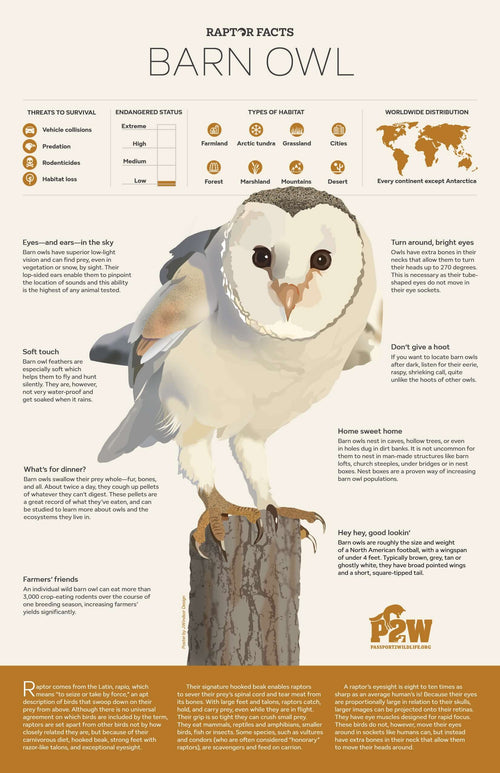
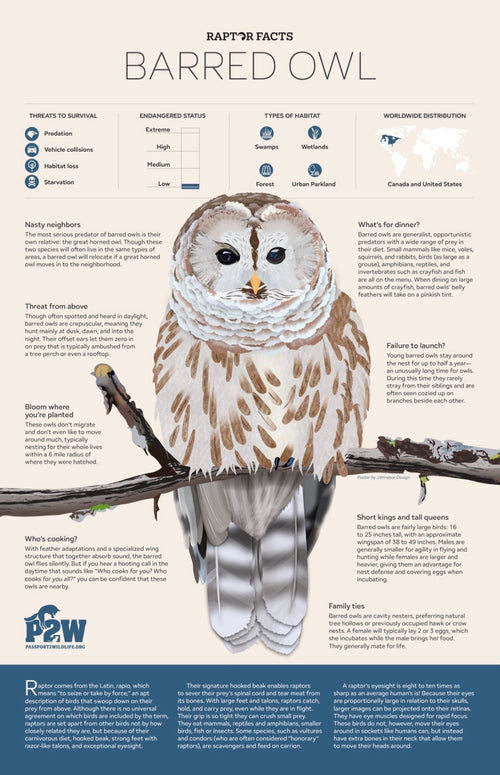
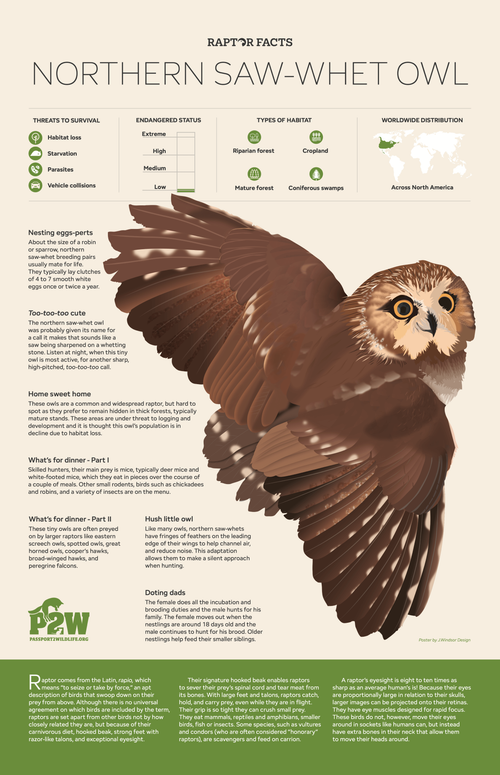
- an owl poster (so students can point to wing/feather features and label adaptations)
- sensory systems visuals (to connect “quiet wings” to “listening hunters”)
Then you’ve got a full loop:
structure → function → evidence → explanation
The Takeaway
Owls aren’t silent because they’re spooky.
They’re silent because they’re built that way.
Silent flight is nature doing what good engineering always does:
solving a problem with smart design—
and leaving just enough mystery for students to lean in closer.