
No Products in the Cart
Owls in the City: Night Predators in Streetlight Territory

How urban owls adapt to our rhythm—and what your students can discover right outside the school doors
City nights aren’t dark anymore.
They glow. They hum. They flicker. They stay awake.
And somehow—quietly, efficiently—owls stay awake too.
Urban owls aren’t “lost” in town. In many places, they’re doing what owls have always done: hunting edges, listening for movement, and taking advantage of whatever the landscape offers. The difference is that the landscape now includes streetlights, parking lots, and backyard fences.
Welcome to streetlight territory.
The Hook: Urban Owls Are Adapting to Our Rhythm
Owls didn’t ask for LEDs, porch lights, and late-night traffic.
But they’re still here.
In many cities and suburbs, owls use:
- parks and greenways as movement corridors
- tree-lined neighborhoods as perch-and-pounce hunting zones
- schoolyards and fields as open “mouse-runways” after dark
They don’t need a wilderness postcard.
They need food, cover, and a hunting route.
Streetlights Change the Night (and That Changes the Food Web)
Light pollution doesn’t just make it harder to see stars. It changes the behavior of animals—especially at night.
What light can do to prey
Streetlights and bright yards can:
- make some small mammals avoid open spaces (more exposure)
- push prey movement into darker edges and brushier cover
- shift where and when animals feed
What light can do to predators
For owls, artificial light can be a mixed deal:
- it can make some hunting areas more visible
- but it can also reduce stealth if prey changes behavior
- and it can alter the timing of the entire night community
Big takeaway:
Light doesn’t just brighten habitat. It rewrites it.
The “Habitat Pockets” Where Urban Owls Win
Urban owls often thrive not because cities are perfect—but because cities are full of pockets.
Look for:
- parks + sports fields (open hunting lanes)
- greenways + creek corridors (safe travel routes)
- cemeteries (quiet, tree-rich, low disturbance at night)
- railway edges (linear habitat strips, rodent movement)
- old trees + cavities or larger evergreens (roosting shelter)
- edges where open grass meets shrubs or trees (classic owl hunting setup)
Owls don’t just hunt “in the city.”
They hunt the city’s seams.
Prey Shifts: City Menus Aren’t the Same as Forest Menus
Urban areas often mean different prey availability:
- more rodents around human food sources (trash, pet food, compost, grain)
- more birds concentrated around feeders
- different movement patterns because of fences, pavement, and landscaping
That doesn’t mean “more prey equals better.”
It means the owl’s success depends on how well it can hunt within the city’s rules—and how safely humans manage attractants.
A Quick Reality Check: Coexistence Is a Habitat Feature
Urban owl success often depends on people doing small, practical things:
- securing trash and compost
- reducing rodenticide use (poisons can move up the food web)
- preserving trees and “messy edges” where wildlife actually lives
- using shielded, warm-toned outdoor lights when possible
You don’t need to make your yard a forest.
You just need to stop accidentally making it a hazard.
Classroom Connection: Neighborhood Habitat Audit
“Where could an owl live here?”
This is one of the best ways to get students thinking like ecologists—because it turns the familiar into a map.
Step 1: Give students a simple “owl needs” checklist
Owls need:
- food (prey presence)
- cover (trees/brush for roosting, hiding)
- hunting space (open areas or edges)
- safe corridors (connected habitat strips)
Step 2: Walk the school neighborhood (or use a map)
Have students mark:
- open grass areas
- tree clusters
- thick shrubs/hedges
- water/creeks/drainage corridors
- streetlight hotspots vs darker zones
- quiet zones vs noisy zones
Step 3: Students make a claim
Each group answers:
“Where could an owl hunt or roost near our school? Why?”
Require:
- 3 evidence points (edge, cover, prey signs, corridor)
- 1 “risk” (light/noise, traffic, lack of cover)
- 1 improvement (plantings, preserving trees, reducing poison)
Optional add-on: “Night Shift Schedule”
Ask:
What changes after dark? What animals become active? What spaces become safer or riskier?
Product Pairing: Poster + Pellet Lab = Outside Map + Inside Proof
This lesson becomes unforgettable when students can connect habitat prediction to diet evidence.
Pair it with:
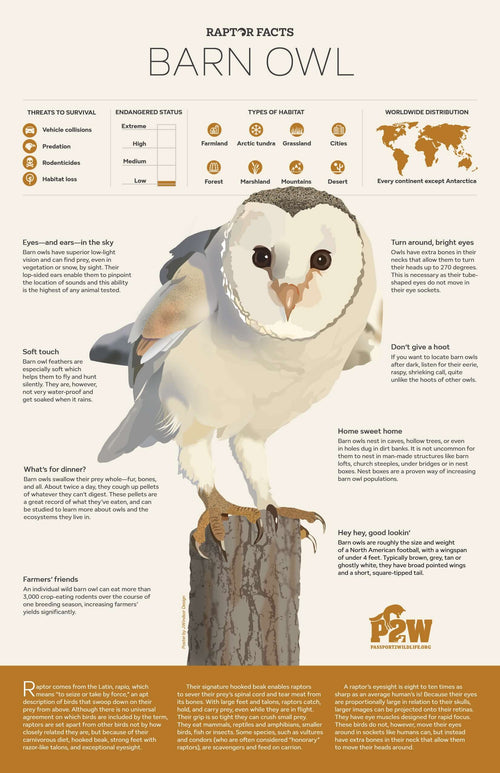
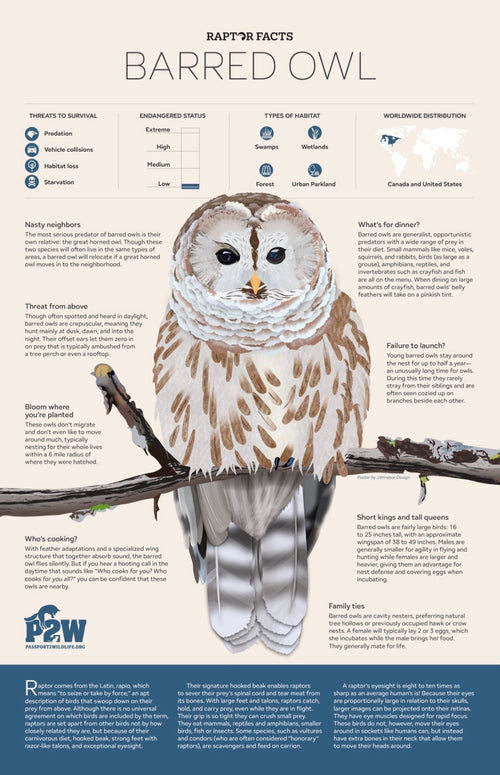
- an owl poster (adaptations: hearing, silent flight, hunting behavior)
- an owl pellet lab (what prey is actually in your local food web?)
Sequence that works beautifully:
- Habitat audit: Where could owls live here?
- Pellet lab: What are they eating?
- Food web build: What does that tell us about the city ecosystem?
It turns “city wildlife” from a concept into a system.
The Takeaway
Owls in cities aren’t a contradiction.
They’re a reminder that wildlife doesn’t disappear when humans arrive—it adapts, reroutes, and finds the pockets we leave behind.
The question isn’t “Do owls belong in the city?”
It’s:
What kind of city are we building for the night shift?