
No Products in the Cart
Owl Ears Aren’t Symmetrical—And That’s the Point

How owls “see” with sound (and how to test it with your students)
Here’s a weird owl truth that makes students lean in closer:
Most owl faces look perfectly balanced… but in many species, the ears are not.
One ear opening sits a little higher than the other. Sometimes one points slightly forward, the other slightly back. It’s not a mistake. It’s not a flaw.
It’s a built-in navigation system for sound.
Because for an owl hunting at night—or under a layer of snow—sound isn’t just helpful.
Sound is the map.
The Hook: When Your Ears Don’t Match, You Hear Better
If you’re a mouse in tall grass, your survival strategy is simple:
Don’t get seen. Don’t get heard. Don’t get caught.
Owls flipped that script.
Many owls can locate prey with stunning precision by listening for tiny rustles—sometimes even when prey is hidden. To do that, they need sound information that tells them more than “left or right.”
They need up/down too.
That’s where asymmetrical ears come in.
The Owl’s “Sound GPS”: How Offset Ears Create a 3D Map
When a sound reaches your ears, your brain compares it using two main clues:
1) Timing differences (Which ear heard it first?)
This helps with left vs right.
2) Loudness differences (Which ear heard it louder?)
This helps refine direction, especially for higher-frequency sounds.
Now add the owl upgrade:
3) Vertical information (Up vs down)
If one ear opening is slightly higher than the other, a sound from above hits one ear differently than a sound from below—creating a consistent pattern the owl brain can interpret.
Student translation:
Offset ears give an owl “stereo sound”… with height.
So the owl doesn’t just hear “over there.”
It hears “over there, slightly above the grass, two wing-lengths away.”
That’s not spooky. That’s physics.
The Facial Disk: The Owl’s Built-In Satellite Dish
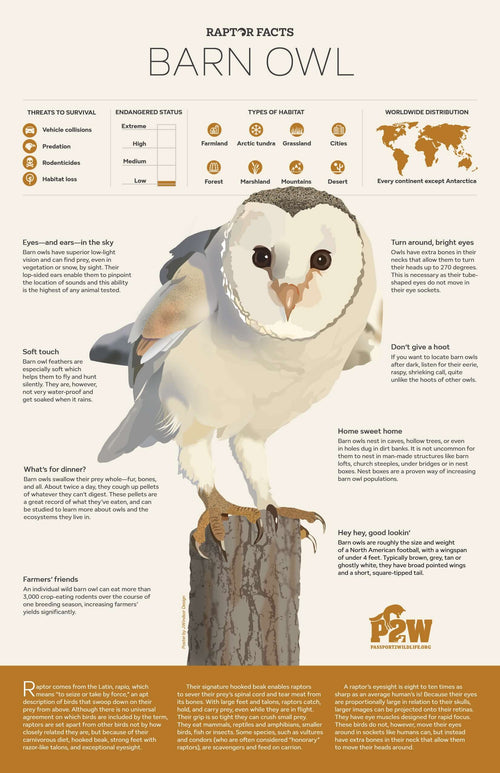
Now look at an owl’s face. That round “moon face” isn’t just cute. It’s a tool.
The facial disk is made of stiff, curved feathers that help collect and funnel sound toward the ear openings—like a satellite dish gathering signals.
It does two big jobs:
- Focus sound (especially faint rustles)
- Improve directionality (so the owl can pinpoint where the sound came from)
Some owls can even subtly adjust their facial disk feathers, changing how sound is directed—like tuning the rim of a dish.
Student translation:
Owls don’t just have good ears. They have a sound-collecting face.
Why This Matters in Winter
Winter changes the soundscape. Snow can muffle some noises. Wind adds constant background sound. And prey often moves under cover—under grass, leaves, or even snow.
That means an owl’s success depends on:
- hearing tiny, brief sounds
- filtering out background noise
- locating prey fast enough to strike
Sound isn’t just something animals use.
Sound is habitat.
When a habitat gets louder (roads, machinery, constant human noise), it can mask the quiet sounds owls rely on—like trying to read a map through fog.
Field Notes: Spotting “Listening Behavior” in Owls
If you’re lucky enough to watch an owl hunt, look for:
- head tilts and micro-turns (fine-tuning sound direction)
- long pauses (listening, not looking)
- sudden, decisive movement after a tiny sound
Owls often “aim” their head like a microphone.
Because that’s essentially what it is.
Classroom Connection: Sound Location Game (Eyes Closed)
This is simple, fast, and memorable—and it sets up great discussion about how noise changes outcomes.
Materials
- A small sound maker: finger rub, paper crinkle, pencil tap, keys (quietly)
- Optional: blindfolds
- Optional: a “background noise” source (fan, soft music)
Set-Up
- Choose one student as the “owl” (eyes closed or blindfolded).
- Another student is the “mouse” and makes a tiny sound from somewhere in the room.
- The “owl” points to where the sound came from.
Round 1: Quiet Room
- Run 3 trials.
- Record accuracy.
Round 2: Add Background Noise
Turn on a fan or quiet classroom noise (or have students gently rustle paper as “wind”).
- Run 3 trials again.
- Record accuracy.
Discuss
Ask:
- What changed?
- Was it harder to locate direction? Distance?
- If you had to hunt using sound, how would a louder habitat affect you?
CER Extension (Claim–Evidence–Reasoning)
Claim: Background noise makes sound-location harder.
Evidence: Trial results (misses/accuracy changes).
Reasoning: Connect masking to owl hunting success.
Product Pairing: Make the Anatomy Visible
This lesson lands best when students can point to what you’re describing.
Pair it with:
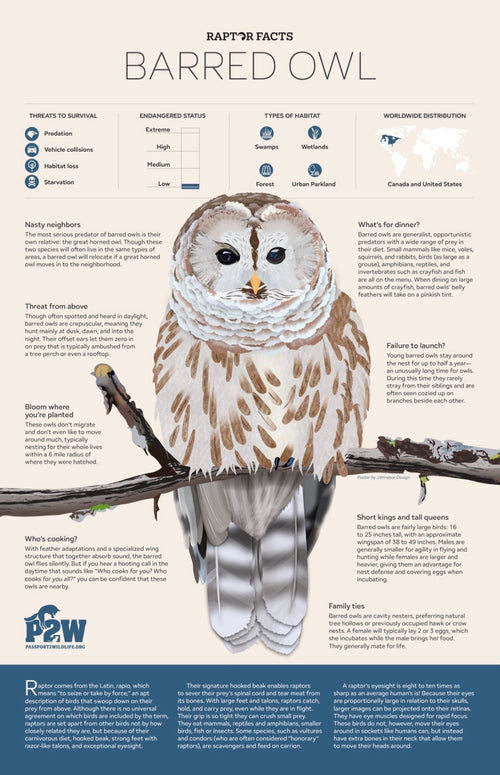
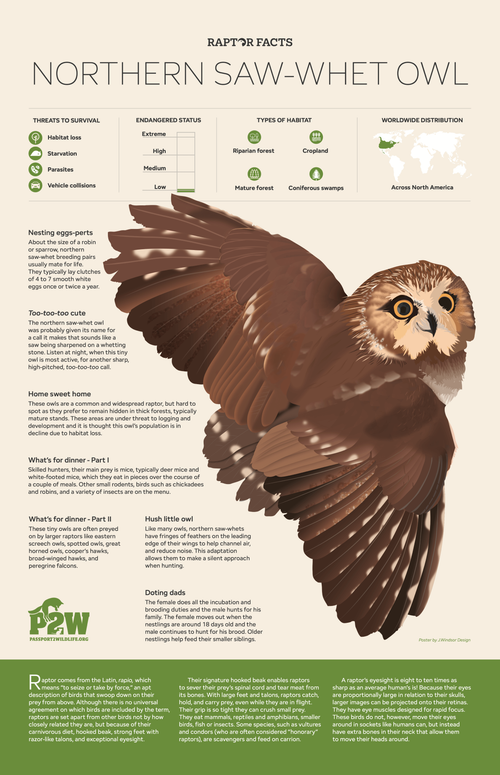
- an owl anatomy poster (facial disk, head shape, adaptations)
- your “Sound Is a Habitat” unit visuals to connect sensory biology to real-world habitat changes
Then students can build the full chain:
adaptation → function → survival → habitat conditions
The Takeaway
Owls don’t have mismatched ears by accident.
They have them because the night is a puzzle—and sound is how you solve it.
Owls are proof that “seeing” isn’t only about eyes.
Sometimes, the clearest view of the world is the one you build with your ears.