
No Products in the Cart
Grey Wolf in Winter: Who’s Really Out There When the Snow Is Quiet?

December in wolf country feels like a trick question.
Step outside and you might see… nothing. Just snow, dark trees, your own breath. But if you could press rewind on the night, the same landscape would light up with pawprints, scent trails, and a lot of quiet, coordinated movement.
This is wolf season.
In much of northern North America, winter isn’t when gray wolves struggle most. It’s when their strengths line up perfectly with the world outside: long nights, cold air that carries sound, and prey animals burning energy just to stay alive.
Let’s walk through what wolves are really doing in December and Christmas time—and how you can turn that into a winter lesson that’s honest, science-based, and still a little bit magical.
Winter Is When Wolves Feel Most Like Wolves
We tend to think of winter as “shut down” mode. But for wolves, it’s when their design finally makes sense.
In December, a wolf pack is:
- Traveling more together instead of spreading out
- Using the snow as a map, following and crossing tracks of deer, elk, and moose
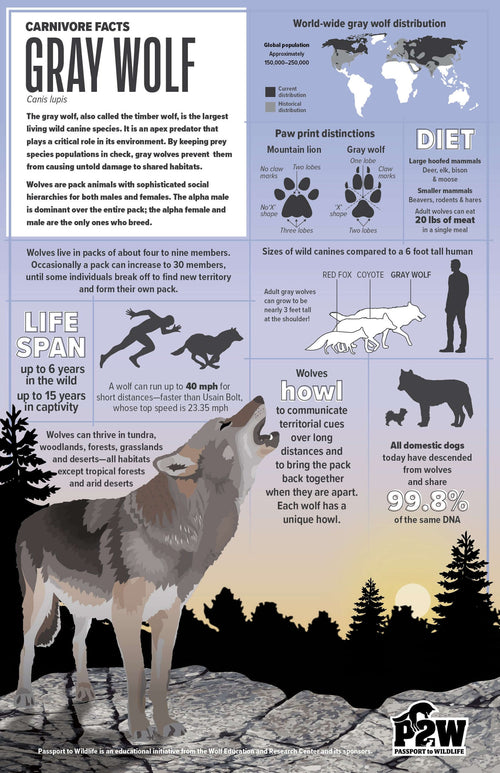
- Calling more clearly, because cold air carries howls for miles
- Hunting smarter, not harder, choosing weaker or injured animals when they can
Snow actually helps wolves:
- Deep snow slows big-hoofed prey
- Frozen lakes and rivers become travel highways for wolf packs
- Tracks tell a whole story—who passed through, how fast they were moving, whether they were limping, alone, or in a group
To a wolf, a fresh snowfall is like a blank white notebook waiting for new notes.
Wolf Packs: Winter Is Teamwork Season
A wolf pack isn’t a random collection of wolves. It’s usually a family: parents plus their current-year pups, and sometimes older siblings from previous years.
In winter, that family structure matters more than ever:
- Adults do the heavy lifting on hunts
- Yearlings (older siblings) are learning adult skills and helping babysit and scout
- This year’s pups are too small to help much with big prey, but they’re learning what a “normal” winter looks like
When you strip away the myths, you can explain a pack like this:
“A wolf pack is just a family that spends a lot of time outside together, working to find dinner.”
That simple idea helps kids rethink scary stories, and see wolves as social, learning animals navigating a hard season.
What Are Wolves Eating in December?
It depends where they live, but in many North American wolf ranges, winter prey includes:
- Deer
- Elk
- Moose
- Caribou (in northern regions)
- Occasionally smaller prey (hares, beavers, rodents) as snacks
Winter is all about energy math:
- Prey animals are losing energy just trying to walk through deep snow and stay warm
- Wolves are also balancing their own energy: too many failed chases and the pack burns precious calories
So wolves often:
- Test groups of prey, looking for individuals that lag or move oddly
- Use deep snow or ice to their advantage
- Give up on strong, fast animals and save their energy for the next opportunity
This isn’t mindless “killing for fun.” It’s careful risk vs. reward.
For students, you can frame it as:
“Every chase is an energy gamble. If the wolves lose too many gambles, they might not make it to spring either.”
Winter Howling: Not Just for Spooky Stories
December evenings set the stage for one of the most misunderstood wolf behaviors: howling.
Why do wolves howl in winter?
- To find each other over long distances
- To mark their territory with sound: “We’re here. This space is taken.”
- To rally the pack before or after travel and hunts
Cold air makes sound travel farther, and quiet snowy landscapes are like an acoustic amphitheater. But that doesn’t mean wolves are howling all night long; often, it’s short bursts tied to specific events.
Help kids reframe it:
- Not as a “monster sound”
- But as a family roll call or a fence line announcement you can hear instead of see
If you want to tie it into December/Christmas:
“While we’re singing in living rooms and school concerts, wolves may be doing their own short ‘roll call song’ out in the snow.”
Wolves & Winter Myths: What’s Real, What’s Not?
Winter wolf myths tend to get louder around the holidays—books, movies, and decorations love a dramatic snowy wolf.
You can gently untangle a few ideas:
Myth: Wolves spend winter attacking anything that moves.
Reality: Wolves are cautious. They choose prey that gives them the best odds of success and survival, and often avoid risky or unfamiliar situations.
Myth: Wolves always hunt huge prey in dramatic pack attacks.
Reality: Some hunts fail. Sometimes they eat smaller animals or scavenged remains. Real life has a lot more “we tried and it didn’t work” than movie scenes.
Myth: Wolves are “bad guys” in the ecosystem.
Reality: As top predators, they help keep prey populations healthier over the long run by removing sick, injured, or very old animals. Their presence can even shape where prey spends time, protecting overgrazed areas.
This opens the door to discussion about stories vs. science, which is perfect for cross-curricular reading + science.
Classroom Connection: Winter Wolf Activities
1. “Follow the Tracks” Map
Goal: Show how snow turns wolves into excellent readers of the landscape.
Have students:
- Draw a simple snowy landscape: forest, open field, frozen river, maybe a small town edge.
- Add three sets of tracks:
- A large hoofed animal (like deer or elk)
- A single wolf
- A wolf pack
- Use arrows or color to show who is moving where and why:
- Prey tracks zig-zagging toward food
- Wolf pack tracks following a trail, then splitting, then reforming
Then ask:
- Where would you be if you were a deer trying not to be found?
- Where would you be if you were a wolf trying to find the easiest path?
This helps kids think like both predator and prey.
2. Pack vs. Family: Venn Diagram
Goal: Compare a wolf pack to a human family during winter/holiday time.
On the board (or on paper), draw a simple Venn diagram:
- Left circle: Wolf Pack in Winter
- Right circle: Human Family in December
Have students fill in:
Wolf Pack in Winter:
- Shares food from hunts
- Travels together outside
- Communicates with howls and body language
Human Family in December:
- Shares holiday meals
- Travels to visit relatives
- Communicates with phones, talking, and songs
Middle (both):
- Protect younger members
- Learn from older members
- Use routines (meals, sleep times, “family meetings” or howls)
It’s a gentle way to help students see connection instead of fear.
3. “Postcard from a Winter Wolf”
Goal: Turn science content into creative writing.
Prompt:
“Write a short postcard from a gray wolf in December to a human kid. Explain what your winter day is like, what you’re worried about, and what you’re really good at.”
Students can include:
- Where their pack is living
- What they’re hunting
- How cold it feels
- What they hear at night
This lets them show understanding of wolf behavior while practicing perspective-taking.
A Note on Wolves & People
Any time you talk about wolves, it’s worth adding a simple, balanced message about coexistence:
- Wolves generally avoid people when possible.
- Problems usually arise when livestock or easy food sources are involved.
- Different communities have different views on wolves, often based on real experiences and history.
For kids, you can frame it like:
“Wolves aren’t villains or cuddly pets. They’re wild neighbors trying to survive winter, just like deer, owls, and foxes are.”
This invites empathy without romanticizing.
Winter Takeaway: The Snow Isn’t Empty
When snow falls on wolf country, it can look like the world has gone quiet.
But under that silence, gray wolves are:
- Traveling together as family packs
- Testing the energy math of each hunt
- Raising pups that will remember this winter as “normal”
- Holding territories not with fences, but with scent marks and howls
Next time you talk about cozy nights, warm blankets, and winter break, you might add:
“Somewhere under this same sky, a wolf pack is moving through the snow, reading tracks, listening to the wind, and trying to make it through winter, one decision at a time.”
That’s the heart of a good wildlife lesson: not just facts, but a shift in how we picture who’s out there in the dark, living their own busy, careful lives while we sleep.