
No Products in the Cart
Black Bear Day: If Winter’s Forecast Came From the Forest’s Real Heavyweight

Groundhog Day is cute. Classic. A little theatrical.
But if we’re being honest?
If you wanted a true seasonal expert—an animal whose entire life is engineered around winter—your protagonist wouldn’t be a groundhog.
It would be an American black bear.
Because black bears don’t just predict winter. They survive it, sleep through it, and wake up when the world is actually ready.
So let’s rewrite the tradition.
Same morning. Same crowd. Same nervous microphones.
Different star.
Meet the New Forecaster: The American Black Bear
Our black bear doesn’t pop out for applause.
He’s not built for pageantry.
He’s built for energy math.
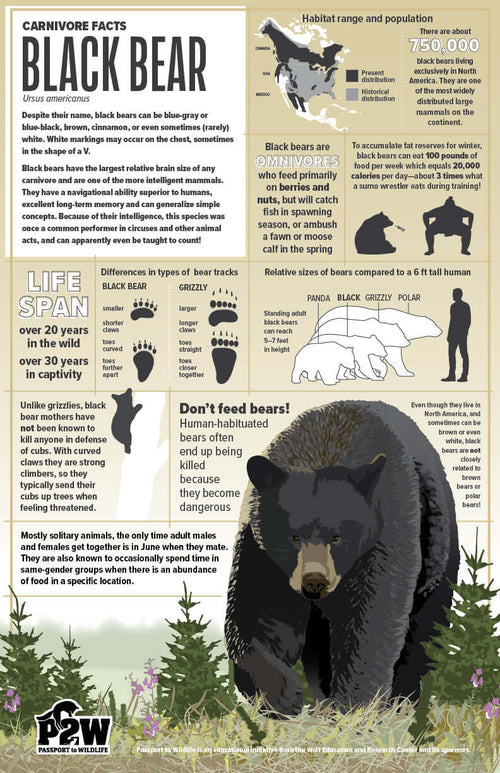
All fall, he’s been doing one job: packing in enough calories to make it through months when food is scarce. Then he disappears into a den and switches the whole body into low-power mode.
That’s not superstition. That’s biology.
And it’s exactly why a bear would make the most believable “seasonal forecast” character we’ve ever had.
The Plot Twist: Bears Don’t “Hibernate” Like a Cartoon
A lot of people toss the word hibernation around like it means “deep sleep, done.”
Black bears do something more interesting.
They enter a long winter dormancy where:
- their metabolism drops dramatically
- their heart rate slows
- they conserve energy for weeks to months
And here’s the part that feels like science fiction:
They can go the whole denning season without eating, drinking, urinating, or defecating—recycling resources internally in ways we’re still fascinated by.
So while the groundhog is checking the weather like a tiny celebrity meteorologist…
The black bear is running a months-long masterclass in survival.
If Black Bears Ran Groundhog Day, What Would the “Shadow” Even Mean?
Let’s keep the tradition, but upgrade it.
Instead of: “Did I see my shadow?”
Our bear asks: “Is this landscape ready to pay me back?”
Because for a bear, waking up isn’t about sunshine.
It’s about food availability.
A bear doesn’t win spring by guessing.
A bear wins spring by waking up at the right time.
So Black Bear Day would look more like this:
- Are early plants emerging?
- Are insects active yet?
- Are there carcasses from winterkill?
- Are berry buds and shoots on the way?
- Is snow cover still blocking travel and foraging?
Forecast logic:
If the pantry is still locked, winter is still in charge.
The Real “Signs” a Bear Would Use (aka: The Forest’s Data Dashboard)
A bear is a walking decision-maker, tuned to cues that matter:
Temperature trends (not one warm day)
One random sunny day doesn’t mean spring. Bears are sensitive to patterns.
Snow depth and crust
Snow doesn’t just cover food. It affects movement and energy cost.
Smells and thaw signals
Thawing ground and early plant growth change the scent profile of the forest.
Day length
Photoperiod is one of nature’s most reliable seasonal cues. It doesn’t fake you out the way weather can.
So if a bear steps out on February 2nd?
That means something is shifting—at least enough to check.
Black Bear Day: A Better Story to Teach Winter Ecology
This version of Groundhog Day is secretly a perfect lesson because it’s not “prediction.”
It’s adaptation.
It teaches:
- how animals use environmental cues
- how energy budgets drive behavior
- why timing matters in seasonal ecosystems
And it flips the whole holiday from folklore to field science—without losing any fun.
Classroom Connection: “Who Would Be the Best Spring Forecaster?”
Activity 1: Animal Forecast Face-Off
Have students compare 3 animals:
- groundhog
- American black bear
- a migratory bird (like a robin)
Ask:
- What cues would each use (temperature, day length, food)?
- What are the risks of being wrong?
- Who has the most to lose?
Then students make a claim:
“The best spring forecaster is ____ because ____.”
Require 3 evidence points.
Activity 2: Energy Budget Mini-Lab
Give students a simple “winter energy” chart:
- If a bear wakes too early, what happens to energy reserves?
- What if spring arrives late?
- Why might a warm spell be a trap?
It’s math, ecology, and decision-making rolled into one.
Writing Prompt: “The Bear Steps Out”
Tell students to write a short scene:
It’s February 2nd. The forest is quiet. A black bear steps out of the den.
Rules:
- include 3 real ecological cues (snow depth, day length, food signs, temperature trend)
- include 1 risk and 1 reward
- label one sentence as observation and one as inference
You’ll get creative writing and scientific thinking.
The Takeaway
Groundhog Day is a tradition.
But Black Bear Day? That’s a reality check from the forest.
Because if your whole winter survival depends on timing, you don’t guess. You listen to the land. You read the cues. You wake up when the world is ready.
And if the black bear “sees his shadow”?
He doesn’t announce six more weeks of winter.
He turns around like a professional and says:
“Not yet.”