
No Products in the Cart
Barn Owl Menu Mysteries: What Wouldn’t a Barn Owl Eat?

Hook: every good food web has a “not on the menu” list.
Picture a barn owl floating over a summer field after sunset. The grass is warm. Crickets are calling. Mice and voles are moving through tunnels of stems like tiny commuters in a hidden city. The barn owl is hungry. But it is not looking for watermelon. It is not looking for sunflower seeds.
It is not swooping down for corn, berries, hot dogs, or picnic crumbs. That sounds obvious… until students start asking the best question: How do we know what a barn owl would not eat?
The Barn Owl Menu Is Mostly Small Mammals
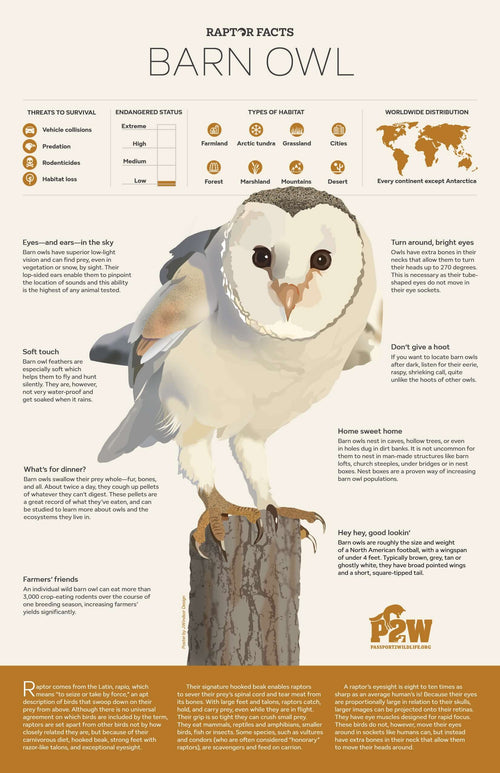
Barn owls are famous for hunting small mammals. Depending on the habitat, their pellets often contain evidence of:
Voles: a favorite prey in many grassy places.
Mice: common in fields, barns, edges, and farms.
Shrews: tiny insect-eating mammals that may show up in pellets.
Small rats: possible where size and access make sense.
Occasional small birds: less common, but possible in some places.
That list is a clue, not a rule. Barn owl diets shift with location, season, weather, and prey availability. But the pattern is strong: barn owls are small-prey specialists.
What Barn Owls Usually Do Not Eat
Now for the reverse menu. Barn owls usually do not eat foods that do not fit their body, hunting style, or digestive system.
Plants: grass, leaves, berries, flowers, and seeds are not barn owl food.
Human picnic foods: chips, sandwiches, candy, and fruit slices are not prey.
Large animals: rabbits, cats, dogs, deer, and raccoons are too large for normal barn owl hunting.
Most fish: barn owls are field hunters, not fishing specialists.
Nectar or pollen: those belong to pollinators, not owls.
Rotting scraps: barn owls are hunters, not garbage feeders.
Could an owl make an unusual choice under unusual conditions? Wildlife always leaves room for surprises. But for classroom science, “usually not” is the honest phrase.
Why Not? Body Design Gives the Clues
A barn owl’s body is built around a very specific job.
Silent wings help it approach small prey without warning.
Long legs and sharp talons help grab animals in grass.
A heart-shaped facial disk funnels sound toward the ears.
Large eyes help in low light.
A hooked beak helps tear prey into swallowable pieces.
None of those adaptations are useful for cracking sunflower seeds or peeling berries. That is the student-friendly shortcut: Form matches function. Function points to food.
Pellets Show What Was Eaten - Not Everything Nearby
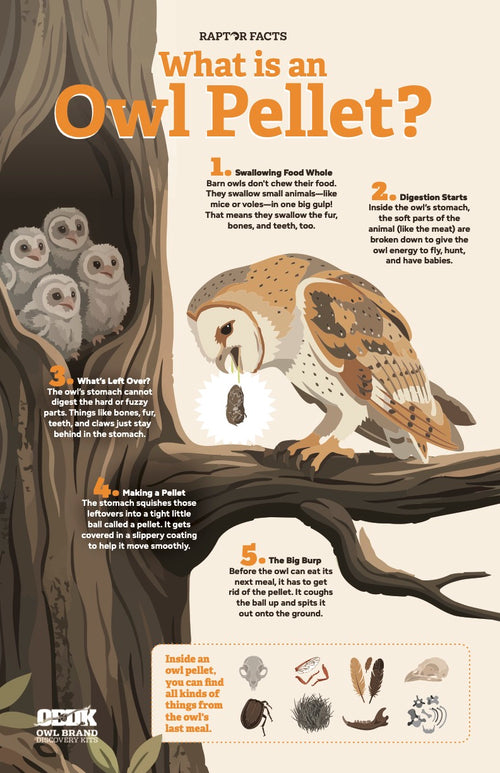
Owl pellets are wonderful because they contain hard evidence. Students may find skulls, jaws, teeth, ribs, and other bones from prey the owl swallowed. But pellets also teach a limitation. If corn grows in the field, corn may be near the owl. That does not mean corn is in the owl. If berries grow along the fence line, berries may feed songbirds, insects, or mammals. That does not make them barn owl food.
Nearby is not the same as eaten. That one sentence can sharpen a whole science lesson.
Common Mix-Ups Students Make
Students are excellent pattern seekers. Sometimes they just need help separating habitat clues from diet clues.
“It lives near farms, so it eats crops.” Not usually. It hunts animals that live near crops.
“It lives in a barn, so it eats barn food.” Not usually. It uses barns for shelter and hunting access.
“It swallows bones, so it eats bones.” Not exactly. Bones come with the prey, then get packed into pellets.
“It is a predator, so it eats anything.” No. Predators still have limits.
“If it is in the pellet tray, the owl ate it.” Only if it came from the pellet, not the classroom table.
This is where “notice → predict → look for more evidence” becomes more than a slogan.
Classroom Connection: “Summer Picnic Reverse Pellet Lab”
This activity turns owl pellets into a playful summer food-web mystery. The twist? Students are not just asking, “What did the barn owl eat?” They are also building the “Nope, Not Dinner” side of the menu.
Materials
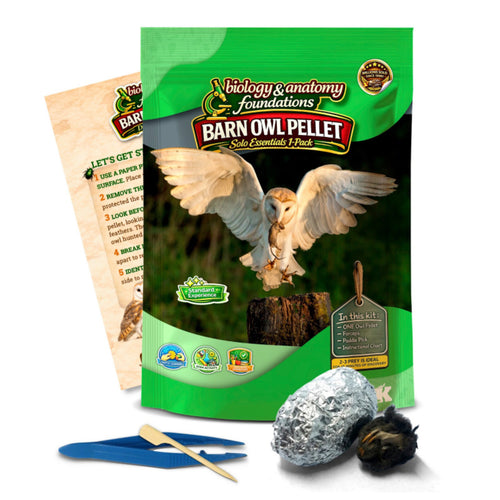
OBDK owl pellets
Paper plates or trays
Gloves and handwashing supplies
Summer “picnic cards” with foods and animals
Make the picnic cards
Likely prey: vole, mouse, shrew, small rat.
Possible but less common: small bird, large insect.
Usually not: watermelon, corn, sunflower seeds, berries, chips, hot dog, frog-shaped candy, rabbit, fish, pet food.
Step 1: Dissect the Evidence
Students open one pellet and sort bones carefully.
They identify prey clues using skulls, jaws, or teeth.
They record only what the pellet actually supports.
Step 2: Build Two Menus
Barn Owl Ate This: items supported by pellet evidence.
Barn Owl Would Usually Not Eat This: items that do not fit barn owl hunting or digestion.
Need More Evidence: items that might be possible, but not proven.
Step 3: The Summer Picnic Challenge
Give each group five silly picnic cards and ask them to defend every placement. They must use this sentence frame:
“We placed ___ in the ___ category because the evidence shows ___.”
Then let groups trade cards and challenge each other. Is a berry in the pellet? No. Could a mouse eat berries? Maybe. Could the barn owl eat the mouse? Yes.
Suddenly, students are not just sorting foods. They are building a food web chain.
The Takeaway
Barn owls do not eat everything in a field. They hunt what their bodies are built to catch: mostly small mammals, often moving through open habitat at night. Owl pellets help students prove what was eaten. The reverse menu helps them prove what probably was not. That is good science: not just collecting answers, but sorting evidence.
So ask your students one final summer question: If a barn owl would not eat the picnic… who in the food web might?