
No Products in the Cart
Why Do Owls Blink With Three Eyelids?

Hook: An owl has more eyelids than you do.
That usually stops students for a second. Two eyelids make sense. We blink, we sleep, we keep dust out of our eyes. But three?
Owls have a special third eyelid called a nictitating membrane. It is thin, protective, and often partly see-through. It sweeps across the eye like a tiny windshield wiper — cleaning, moistening, and shielding without shutting the whole world out.
So the real question is not just, “Why do owls blink with three eyelids?”
It is: what problem does that third eyelid solve?
The Third Eyelid Has a Science Name
The nictitating membrane is found in many animals, including birds, reptiles, amphibians, fish, and some mammals. In owls, it moves from the inner corner of the eye across the surface.
Think of it as a built-in eye shield. It does not replace the regular eyelids. It adds another layer of protection for an animal that depends heavily on sight and sound.
For students, the word may sound fancy. The job is simple:
Protect the eye from dust, debris, and contact
Moisten the eye so the surface stays healthy
Clean the eye by sweeping across it
Allow some vision while the eye is partly covered
That last point is the owl upgrade. The membrane can help protect the eye without creating total darkness.
Blink One: The Regular Eyelids
Owls still have regular eyelids. They use them for resting, sleeping, and fully closing the eye, much like we do.
But bird eyelids do not always move exactly like ours. In many birds, the lower eyelid moves up more noticeably when closing the eye. The details can vary, but the main idea is the same: regular eyelids are the full close.
Regular eyelids help with:
Sleep and rest
Deep protection when the eye needs to close completely
Light blocking during quiet periods
Moisture control over longer rests
The third eyelid has a different job. It is more like a quick safety tool than a sleeping curtain.
Blink Two: The Clear Shield
The nictitating membrane is often described as translucent. That means light can pass through it, even if the view is not as sharp as normal.
Imagine looking through a thin, cloudy screen. You might not see every detail, but you can still sense movement and light. For a bird in motion, that can matter.
An owl may use this membrane during moments when its eyes need extra protection:
Flying through brush where twigs or grass may brush the face
Landing on rough surfaces like bark, rafters, or nest sites
Handling prey at close range
Cleaning the eye after dust or pollen collects
Keeping the surface moist during dry or windy conditions
It is not a superhero force field. It is a practical adaptation — small, quiet, and very useful.
Protection, Moisture, and Vision Work Together
This is the classroom connection hiding inside the anatomy. The third eyelid is not doing one job. It is balancing three needs at the same time.
Protection: the eye needs a shield during movement and close contact.
Moisture: the eye surface needs to stay wet and clean.
Vision: the owl still benefits from seeing light and movement.
That is a powerful adaptation lesson because students can compare trade-offs. A thick, dark eyelid protects well but blocks vision. No eyelid keeps vision clear but leaves the eye exposed. A translucent membrane sits in the middle.
It is a clue, not a rule for every situation. But it shows how animal bodies often solve several problems at once.
Why Hunters Need Eye Armor
Owls have large eyes for their head size, and those eyes are important hunting tools. Big eyes gather more light, which helps many owls in dim habitats.
But big, exposed eyes also need care.
An owl moving through a barn, forest edge, field, or rocky nesting area may meet plenty of tiny hazards:
wind-blown dust
dry grass stems
feathers and nest material
loose bark
snow crystals or rain
The nictitating membrane helps the owl keep working in those conditions. It is not glamorous, but survival is often built from practical little details.
Ask students: If your job depended on sharp vision, what kind of eye protection would you want?
The Eyelid Clue Card
Use this quick comparison when students are sorting adaptations. The key is to connect structure to function.
Eye Feature |
Main Job |
Student Translation |
|---|---|---|
Regular eyelids |
Fully close the eye for rest and protection |
The sleep curtain |
Nictitating membrane |
Sweeps across to clean, moisten, and shield |
The clear safety shield |
Large owl eyes |
Gather light for low-light hunting |
The night-view tool |
Students do not need to memorize every term immediately. They need to notice the pattern: body part → job → survival advantage.
Classroom Connection: “Three-Eyelid Adaptation Sort”
This is a low-prep activity for comparing protection, moisture, and vision adaptations.
Materials
Index cards or sticky notes
Three category labels: Protection, Moisture, and Vision
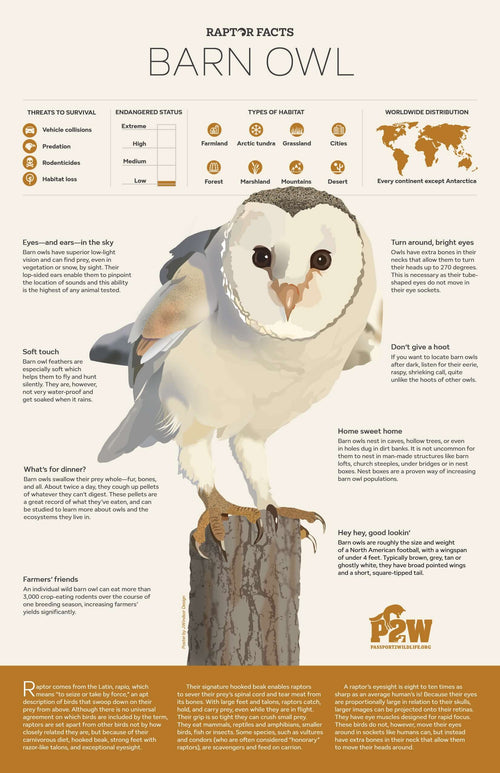
Owl photo, poster, or diagram
Optional: clear plastic sheet to model the membrane
Steps
Start with observation: show students an owl face and ask what they notice about the eyes.
Introduce the membrane: explain that owls have a third eyelid that can sweep across the eye.
Sort the jobs: students place cards under protection, moisture, or vision.
Add evidence: each group must explain why their card belongs there.
Compare adaptations: ask how goggles, windshield wipers, and eyelids solve similar problems.
Discussion question: Is the third eyelid mainly for protection, moisture, or vision?
The best answer is: it helps with all three. That is what makes it such a useful adaptation.
Teacher Takeaway
Owls blink with three eyelids because their eyes need more than a simple open-and-shut system.
The nictitating membrane protects the eye, keeps it moist, and allows some light through while it moves across the surface. It is a shield, a cleaner, and a moisture tool all at once.
For students, the deeper lesson is adaptation thinking. Do not just ask, “What is this body part called?” Ask: What problem does it solve?
That is where owl anatomy becomes ecology — and one blink becomes a survival story.