
No Products in the Cart
Where Do Bees Go in the Fall? The Tiny Winter Plans Students Can Track

Hook: In fall, the flowers fade… but the bee story is not over.
Students may notice fewer bees as the air cools and gardens turn brown. So where did they go?
The answer depends on the bee. A honeybee has one winter plan. A bumblebee has another. A solitary bee may be tucked into a stem, a tunnel, or the soil like a secret waiting for spring.
Fall is not the end of pollinator life. It is the season of preparation.
The Fall Shift: From Flowers to Shelter
Bees need warmth, food, and protection, just like other animals. But they solve those problems in very different ways. As days get shorter and temperatures drop, bees respond to clues in the environment:
Less daylight: a seasonal signal that winter is coming.
Cooler nights: a sign to slow activity.
Fewer flowers: less nectar and pollen available.
Changing plant stems and soil: new shelter opportunities.
That makes fall a perfect time to teach phenology — the study of seasonal timing in nature. Bees are not disappearing randomly. They are responding to a calendar written by light, temperature, and food.
Honeybees: The Winter Cluster Crew
Honeybees are social insects that live in large colonies. In fall, the colony prepares to survive together. Worker bees collect nectar while flowers are still available. The colony turns that nectar into honey, which becomes winter fuel.
When cold weather arrives, honeybees stay inside the hive and form a tight cluster around the queen.
Workers vibrate their flight muscles to generate heat.
The cluster shifts so bees can access stored honey.
The queen stays protected near the center.
The colony uses food carefully until spring flowers return.
Student translation: honeybees do not migrate south. They make a warm, living ball of teamwork. That is not magic. That is bee thermodynamics.
Bumblebees: One Queen Carries the Future
Bumblebees have a very different fall story. Most of the colony does not survive winter. The workers, males, and old queen usually die as cold weather settles in.
But new queens mate in late summer or fall. Then each queen finds a protected place to overwinter. She may hide in:
loose soil
leaf litter
rotting wood
quiet garden edges
undisturbed patches near native plants
Her body slows down. She waits through winter in a state of dormancy. In spring, if she survives, she starts a brand-new colony. So for bumblebees, winter survival is not a whole colony story. It is one queen holding next year’s colony inside her.
Solitary Bees: Hidden in Stems, Soil, and Tunnels
Most bee species are not honeybees. Many are solitary bees, which means each female builds and provisions her own nest instead of living in a large hive.
Fall can find solitary bees in different life stages:
Eggs tucked in nest cells.
Larvae feeding on stored pollen.
Pupae developing quietly.
Adults waiting inside tunnels until spring.
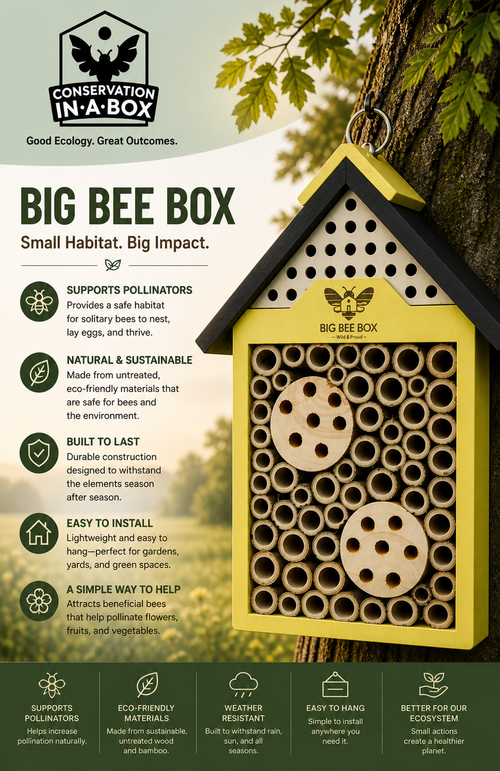
Some nest in hollow plant stems. Others use beetle holes in wood. Many nest underground. This is why “cleaning up” every dead stem in fall can remove important habitat. A dry flower stalk may look finished to us.
To a bee, it may be a nursery.
A Bee Winter Clue Chart
Use this quick comparison to help students notice that one animal group can have many survival strategies.
Bee Type |
Fall Strategy |
Winter Location |
|---|---|---|
Honeybee |
Stores honey and clusters around the queen |
Hive |
Bumblebee |
New queen mates and goes dormant |
Soil, leaf litter, or protected ground |
Solitary bee |
Young develop or wait inside nest cells |
Stems, wood tunnels, or soil nests |
The chart is a clue, not a rule. Bee species vary, and local weather matters. But the pattern is useful: different bees solve winter in different places.
Why Fall Garden Messiness Helps
Students often think helping wildlife means adding something. Sometimes it means leaving something alone. Fall pollinator habitat can include:
standing dead stems for stem-nesting bees
leaf litter for overwintering insects
bare soil patches for ground-nesting bees
late-blooming native flowers for final nectar and pollen
undisturbed garden edges where queens can shelter
That does not mean every garden must be wild everywhere. It means students can ask: Can we leave one small winter refuge?
Classroom Connection: “Where Would You Winter?” Bee Sort
This is a low-prep activity that turns bee survival into evidence-based thinking.
Materials
Three bee cards: honeybee, bumblebee, solitary bee
Habitat cards: hive, leaf litter, hollow stem, soil tunnel, flower patch
Optional: a schoolyard map or garden sketch
Steps
Sort: Students match each bee to its likely winter shelter.
Defend: Each group explains its match using one piece of evidence.
Revise: Add a weather card, like “early frost” or “warm fall,” and ask what might change.
Design: Students draw one pollinator-friendly fall corner.
Ask: Which bee needs a colony? Which bee needs a hidden queen? Which bee needs an undisturbed nest cell?
That is the real lesson — notice the life cycle, then predict the winter strategy.
The Takeaway
Bees do not all “go” to the same place in fall.
Honeybees cluster in hives. Bumblebee queens hide and wait. Solitary bees often spend winter tucked into stems, soil, or wood tunnels.
The big idea is bigger than bees. Fall is a season of clues: fewer flowers, cooler air, hidden shelters, and animals making careful choices.
Ask students: If you were a bee, where would winter find you?