
No Products in the Cart
Storytime Sleuths #4: Are We a Pack of Wolves?

Hook: What if your class had to cross a snowy forest together?
No phones. No backpacks. No cafeteria. Just paws, noses, ears, and a group that has to make smart choices as one moving team. That is the heart of Storytime Sleuths #4: asking students a playful question with real science behind it.
Are we a pack of wolves? Not because wolves are wild movie monsters. Not because a pack is a bossy line of “alphas.” Because a wolf pack is often a family system solving problems together.
The Big Question: What Makes a Pack?
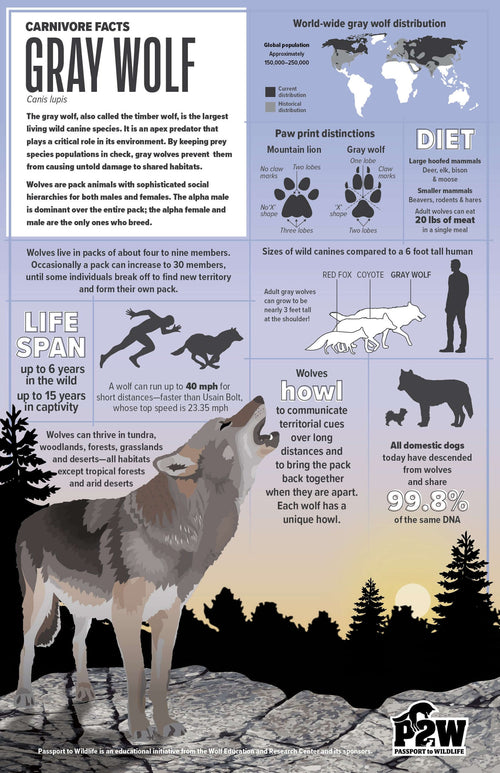
A wolf pack is not just “a bunch of wolves.” It is a group with relationships, communication, shared movement, and survival decisions. Students can think of a pack as a living teamwork model:
They travel together to find food and safer routes.
They communicate with body language, scent, and sound.
They protect young and pay attention to vulnerable members.
They save energy by using paths, timing, and terrain wisely.
They respond to evidence like tracks, smells, weather, and prey movement.
That last piece matters. Wolves do not make choices randomly. They read the landscape.
Pack Behavior Is a Clue, Not a Costume
When kids pretend to be wolves, the goal is not howling chaos. The goal is animal-behavior thinking. Ask students: What would a wolf do, and what evidence would it use?
That keeps the activity grounded in science instead of stereotypes.
Not: “Wolves are scary, so act scary.”
Instead: “Wolves are social predators, so solve a group problem.”
Not: “One wolf controls everyone.”
Instead: “Pack members coordinate, respond, and adjust.”
That is a much better story.
The Wolf Tools: Eyes, Ears, Noses, and Teamwork
Before the activity begins, give students their “wolf tools.” These are not props. They are observation jobs.
Eyes: look for open routes, cover, movement, and obstacles.
Ears: listen for group signals and changes in the “habitat.”
Nose: notice scent clues represented by cards or classroom markers.
Paws: choose energy-saving paths and avoid risky shortcuts.
Pack brain: make decisions together, then explain the evidence.
For younger students, keep it simple: notice, decide, move. For older students, add a claim-evidence-reasoning sentence after each choice.
What Would the Pack Do?
Give the class a story challenge. The pack has pups at a den, snow is getting deeper, and the group needs to travel from one side of the room to the other without wasting energy.
Now add clue cards:
Deep snow: moving here costs extra energy.
Packed trail: easier travel, but less cover.
Raven calls: possible food clue nearby.
Human road: fast route, but risky habitat edge.
Forest cover: safer, but slower.
Tired pup: the group must slow down or adjust.
There is no single perfect answer. That is the point. Good wildlife science often asks, “Which choice makes the most sense with the evidence we have?”
Roles That Keep the Pack Thinking
Assign roles so every student has a job. Rotate roles between rounds so students experience different parts of pack behavior.
Trail Finder: chooses the route and explains why.
Energy Keeper: watches for choices that waste effort.
Pup Watcher: makes sure vulnerable pack members are considered.
Signal Reader: notices body language or teacher-given clues.
Evidence Speaker: gives the final “because” statement.
This turns pretend play into a science discussion. Students are not just acting like wolves. They are practicing how ecologists think about behavior.
Classroom Connection: “Are We a Pack?” Role-Play Lab
This low-prep activity works well after a wolf story, winter ecology lesson, or predator-prey unit.
Materials
Open classroom space or hallway
Clue cards for snow, forest, road, scent, prey, den, and pups
Role cards for pack jobs
Optional: wolf poster or habitat map for reference
Steps
Set the scene: The pack must move from the den to a new hunting area.
Place clues: Spread habitat cards around the room.
Assign roles: Give each student a pack job.
Move silently: Students must use hand signals or quiet discussion.
Pause for evidence: At each clue, the pack decides what to do next.
Explain the choice: “We chose this route because…”
Discussion questions
What helped your pack make decisions?
Did the fastest route always make the most sense?
How did the pack protect weaker or younger members?
What clues changed your plan?
End with one sentence: “A wolf pack survives by…”
The Takeaway
A wolf pack is not a classroom full of chaos. It is a team solving survival problems with communication, timing, movement, and evidence. When students pretend to be a pack, they are really practicing a scientist’s habit: notice → predict → look for more evidence.
So ask them one final question: If our class were a pack of wolves, what would help us survive together?