
No Products in the Cart
Can Owls and Bats Smile

Hook
Sometimes it looks like an owl is grinning and a bat is smirking. The honest truth is simpler and way more interesting: they’re not performing emotion for us, they’re wearing anatomy.
If you’ve ever seen an owl that looks permanently unimpressed (or permanently delighted), or a bat that looks like it’s mid-laugh, you’re not alone. Our brains are built to read faces. We can’t help it.
But animals don’t all “speak face” the way humans do.
So can owls and bats smile?
Can they show facial expressions at all?
Let’s break it down in a classroom-friendly way that stays true to biology.
First, What a “Smile” Actually Is
A human smile is mostly a muscle-driven expression. We have a rich set of facial muscles that can shape lips, cheeks, and eyes into a huge variety of expressions.
That matters, because a smile isn’t just a mouth shape. It’s a coordinated signal with social meaning.
For animals, there are two different questions:
- Can their face physically form expression-like shapes
- Do they use facial expressions as a primary communication tool
Owls and bats answer these very differently from humans.
Owls: The “Smile” Is Mostly a Mask
Owls are famous for looking expressive, but most of what we read as “expression” is actually structure.
Why owls look like they’re making faces
1) The facial disk is a built-in illusion machine
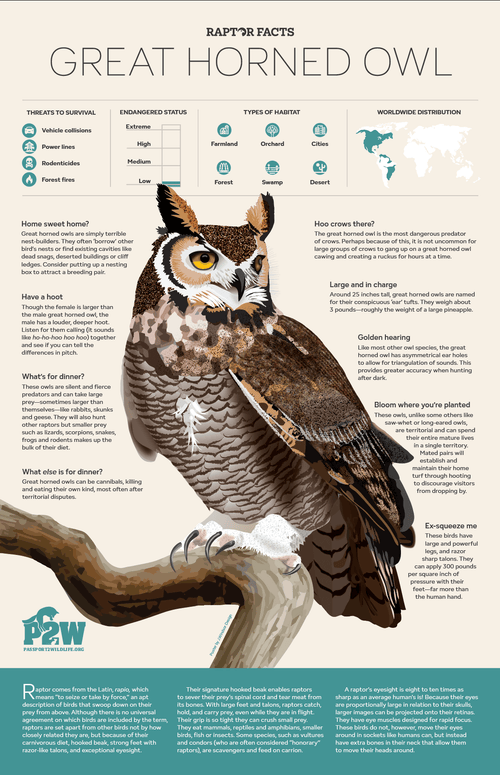
That round face is a facial disk, and it’s designed to funnel sound toward the ears. It creates strong “face-like” cues that our brains interpret as emotion.
Change the head angle and suddenly the owl looks:
- happy
- angry
- confused
- judging your life choices
The owl didn’t change emotion. The lighting and angles changed the “mask.”
2) Their eyes do the talking… but not like ours
Owls have large, forward-facing eyes and a strong brow ridge. That combination reads as “expression” to humans even when the owl is just… looking.
Owls can’t move their eyes much, so they move their head instead. That head movement adds to the feeling that they’re reacting emotionally.
3) Beak shape can mimic a grin
Some owls have beak lines and feather patterns that curve in a way that looks like a smile. That’s not a social signal. It’s feather placement.
Do owls have facial expressions
Not in the human sense. Owls don’t use a wide range of facial muscle expressions to communicate like primates do.
But owls do communicate clearly using:
- posture (tall, compressed, leaned forward)
- feather position (sleek vs fluffed)
- ear tufts in some species (up, down, angled)
- vocalizations (especially in breeding season)
- beak clacking and hissing (a big warning sign)
Teacher-friendly translation:
Owls don’t smile. They broadcast mood with body language, not facial performance.
Bats: The “Smile” Is Usually Teeth and Function
Bats are even more likely to get labeled “smiling,” mostly because of how their mouths and teeth look in photos.
Why bats look like they’re smiling
1) Many bat photos capture active behavior
Bats are often photographed:
- squeaking
- echolocating
- chirping
- chewing
- yawning
- stressed (open-mouth warning behavior)
Open mouth + visible teeth reads as “grin” to humans.
But for bats, that mouth shape is usually:
- feeding mechanics
- sound production
- thermoregulation (panting)
- warning behavior
2) Their faces are built for sensing, not posing
Bat faces can include structures specialized for feeding and sound. Some have more pronounced nose shapes; many have large ears.
Those features can look “expressive,” but they’re functional.
Do bats have facial expressions
Bats don’t show a human-like range of facial expressions.
They communicate more through:
- sound (social calls, mother-pup calls, group chatter)
- touch (roosting contact is a huge part of bat social life)
- scent cues
- body positioning within the roost
If bats “talk,” it’s mostly not with the face. It’s with the voice and the group.
The Big Trap: Our Brains Are Too Good at Reading Faces
There’s a word for what we naturally do: anthropomorphism assigning human emotions or intentions to animals.
Anthropomorphism isn’t always bad. It can help students care.
But it can also cause two problems:
1) Misreading stress as friendliness
An owl that looks “cute and calm” may actually be freezing in place because it’s stressed.
A bat that looks like it’s “smiling” might be warning, panting, or vocalizing.
2) Missing the real signals
If students only watch faces, they miss the real communication:
- posture
- vocalizations
- distance behaviors
- time of day patterns
- roosting behavior
Better question than “Is it smiling” is:
What is it doing, and why would that behavior help it survive
So Do They Feel Emotions
They likely experience internal states: stress, comfort, fear, arousal, bonding.
But the key is this:
Even if an owl or bat feels something, it doesn’t mean it will display it with a human-style facial expression.
Emotion and expression are not the same thing.
Classroom Connection
Activity: Face vs Function Lab
Show students 6–8 photos:
- owls with different head angles / feather positions
- bats with open mouths, closed mouths, yawns, and feeding shots
For each image, students do two columns:
What it looks like (human interpretation): “smiling,” “angry,” “surprised”
What it might be (biology interpretation): calling, warning, thermoregulating, listening, posture change
Finish with a CER:
- Claim: “Owls/bats don’t ‘smile’ like humans.”
- Evidence: they communicate mainly through posture/sound/touch
- Reasoning: facial muscles and signaling systems differ
- Limitation: “We can’t directly measure emotion from a photo alone.”
This turns a funny question into real science: observation vs inference.
The Takeaway
Owls and bats can look like they’re smiling because their anatomy creates face-like cues that our brains interpret emotionally.
But they don’t “smile” the way humans do.
Owls communicate with:
- posture, feathers, head movements, and calls
Bats communicate with:
- sound, touch, roost behavior, and social vocalizations
So yes, you can enjoy the “owl grin” and the “bat smirk.”
Just teach the upgrade:
Their faces are not mood screens. They’re survival tools.