
No Products in the Cart
Bears and Berry Season: The Mast Crop That Shapes Winter Survival

Late summer forests can look quiet, but for bears they are anything but empty. Every berry patch, oak ridge, and beechnut grove is part of a seasonal pantry.
Students may picture bears as hunters first, but many bears survive winter because they are expert foragers. In the right season, a bear’s future can be written in blueberries, huckleberries, acorns, and other mast foods.
That sounds dramatic, but it is real ecology. A strong food year can send bears into winter with full reserves; a weak food year can change movement, behavior, reproduction, and risk.
The Forest Pantry Opens
Berry season usually arrives like a slow wave. Different plants ripen at different times, so bears move through the landscape following what is ready now.
Soft fruits are often called soft mast. Hard seeds and nuts, such as acorns and beechnuts, are called hard mast.
Soft mast: berries, cherries, apples, and other fleshy fruits.
Hard mast: acorns, beechnuts, hazelnuts, and other calorie-rich seeds.
Timing clue: berries may peak before nuts, depending on region and weather.
Habitat clue: forest edges, openings, burns, and sunny slopes can be berry-rich.
For a bear, this is not snacking. It is preparation.
Hyperphagia: The Season of More
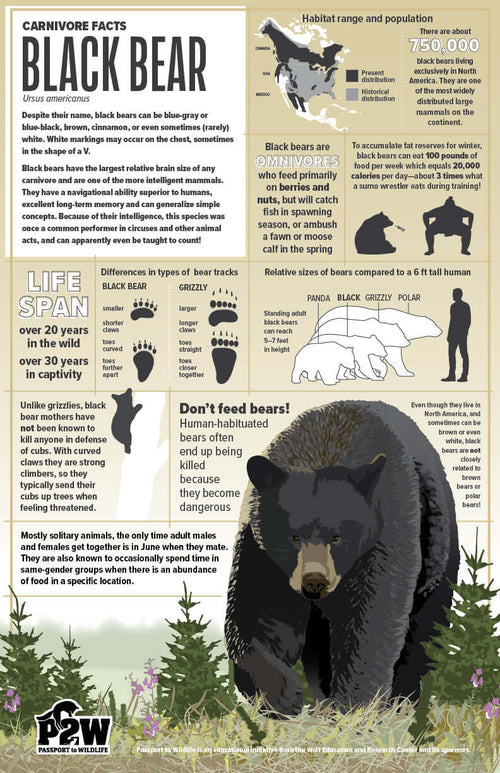
In late summer and fall, many bears enter hyperphagia, a period of intense feeding before winter dormancy. They may eat for much of the day and travel widely to find dependable calories.
The goal is simple: build fat while food is available. Fat is stored energy, insulation, and survival insurance.
Bears need energy to maintain their bodies through winter.
Pregnant females need strong reserves for cub development.
Mothers with cubs need enough food for themselves and their young.
Young bears need practice finding seasonal foods before winter arrives.
This is a great place to remind students that “more eating” is not greed. It is a seasonal adaptation.
Berries Are the Fast Calories
Berries matter because they can be abundant, easy to gather, and spread across large areas. A bear can strip fruit from shrubs quickly, especially when patches are dense.
Berries also connect bears to other parts of the food web. Birds, foxes, insects, rodents, and humans may all be watching the same fruiting season.
Blueberries and huckleberries: important summer foods in many mountain and forest habitats.
Serviceberries and cherries: often eaten when available.
Apples and other fruits: can draw bears near people if trees are close to homes.
Seed dispersal: bears can move seeds through the landscape after eating fruit.
So a berry patch is more than a food source. It is a meeting point in the ecosystem.
Hard Mast: The Winter Bank Account
If berries are quick energy, hard mast is the richer deposit. Acorns and beechnuts are dense, fatty, and valuable when bears are racing the calendar.
But mast crops are not the same every year. Some years trees produce heavy crops; other years the same forest feels almost empty.
Good mast year: bears may find abundant natural food and gain weight efficiently.
Poor mast year: bears may travel farther and use more energy searching.
Patchy mast year: some valleys or ridges may be rich while others are bare.
Weather clue: late frosts, drought, or storms can affect fruit and nut production.
For students, mast is a powerful lesson in uncertainty. Nature does not hand out the same menu every year.
Who Survives Winter?
A mast crop does not “decide” survival all by itself. But it is a major clue, especially when combined with age, health, weather, and habitat quality.
In a strong food year, bears often enter winter heavier. In a poor food year, some bears may have fewer reserves, and females may have less success raising cubs.
Adult bears: may handle poor years better if they know good feeding areas.
Young bears: may struggle because they are still learning the map.
Females with cubs: need reliable food while also protecting and guiding young.
Habitats: mixed forests with many food types can buffer bad years.
That last point matters. Diversity in a habitat can act like backup plans.
When Natural Food Is Scarce
Poor berry or mast years can bring bears closer to people. That does not mean bears are “bad”; it means they are solving an energy problem with the options they can find.
Human foods are often easy, smelly, and available when natural foods fail. That can create conflict if communities leave accidental invitations outside.
Secure trash: especially during late summer and fall.
Remove fallen fruit: before it becomes a bear buffet.
Bring pet food inside: even small amounts can attract wildlife.
Clean grills: grease smells like opportunity.
Use bear-smart storage: in camps, cabins, and bear country classrooms.
The lesson is not fear. It is cause and effect.
Classroom Connection: “The Bear Pantry Map”
Turn berry season and mast crops into a map-based investigation. Students will see how food availability shapes movement and survival.
Materials
A simple habitat map with forest, meadow, stream, town edge, and oak ridge.
Food tokens for berries, acorns, beechnuts, insects, and human food sources.
Scenario cards: good mast year, poor berry year, drought year, late frost year.
Steps
Place the foods: students add tokens where each food would likely occur.
Draw bear routes: students choose paths that gain calories without wasting energy.
Add a change card: remove or reduce one food source, then revise the route.
Rate the risk: mark where bears and people might overlap.
Make a claim: “This bear is more likely to enter winter prepared because…”
End with the science rule: food patterns are a clue, not a rule. Students should use evidence, make predictions, and look for more signs.
Teacher Takeaway
Berries and mast crops are not just fall scenery. They are the calorie engine that helps many bears prepare for winter.
A good crop can support fat gain, cub survival, and lower-risk foraging. A poor crop can push bears to travel farther, spend more energy, and sometimes overlap more with people.
The bigger lesson is ecological thinking. Ask students: If the forest pantry changes, what else changes with it?