
No Products in the Cart
Baby Bats in Spring: Inside a Maternity Roost

Hook: If spring has a nursery, it’s hidden overhead. Quiet. Warm. Crowded. And full of tiny squeaks you’ll never hear from the trail.
Most people meet bats the dramatic way: a quick silhouette at dusk, a sudden zig-zag over a pond, a “Did you see that?” moment that’s gone before you can point.
But spring is when bats become something else entirely.
Spring is when bats become parents.
Not in a nest you can spot from the ground, but in a maternity roost: a shared, carefully chosen space where females gather to give birth and raise pups together.
And once you understand what’s happening inside that roost, bats stop feeling mysterious and start feeling… familiar.
Because it’s a family story.
First, What Is a Maternity Roost
A maternity roost is a place where female bats gather in spring and early summer to give birth and raise their young.
It can be:
- a hollow tree or snag
- a rock crevice
- an attic or barn loft
- under bark or in a bat house
- tucked into a warm gap in a structure
The key requirement is not “pretty.” It’s survivable.
A good maternity roost is:
- warm (pups can’t regulate heat well at first)
- safe from weather
- hard for predators to access
- close enough to good feeding habitat
Think of it as the bat version of a nursery that’s also a thermostat.
Why Maternity Colonies Exist
Here’s the surprising part: many bats don’t raise pups alone.
They raise them in colonies.
And it’s not because bats are being social for fun. It’s because group living solves spring problems.
1) Warmth is everything
Newborn pups can’t handle cold the way adults can. When mothers cluster together, the roost stays warmer.
Warm roost = pups burn less energy staying alive.
Less energy spent on warmth = more energy available for growth.
2) Safety in the hidden crowd
A colony roost can be harder for predators to target, especially when the location is tucked into tight spaces.
3) The “night shift” parenting schedule
Adult females leave at night to feed. A colony means pups are surrounded by bodies and warmth even while moms are out working.
This is one reason spring bat behavior can be so consistent: bats aren’t just hunting. They’re commuting between food and childcare.
Bat Pregnancy: Quiet, High-Stakes Timing
Bats have one of the most intense spring jobs in wildlife: they must rebuild energy after winter and support pregnancy at the same time.
Most species in North America typically have one pup per year (sometimes twins, but one is common). That’s a big deal.
One pup means:
- each baby matters
- each feeding night matters
- each warm roost day matters
Spring becomes a careful balance:
eat enough to fuel yourself, and eat enough to build a whole new bat.
Birth Inside the Roost
Bat births usually happen inside the roost, in a place that feels safe, stable, and warm.
And this is where the “tender” part of the story shows up.
A newborn bat pup is:
- tiny
- helpless
- hairless or lightly furred
- completely dependent
It can’t fly. It can’t hunt. It can’t survive without the roost and the mother.
So the roost becomes the entire world.
The First Weeks: Growth Before Flight
Bat pups don’t grow like a “mini adult.” They grow like an engine that’s being assembled.
Week 1: cling life
Pups cling to their mother or the roost surface. Milk is everything.
Early growth: fur and strength
Fur comes in. Muscles strengthen. The pup becomes better at holding on, regulating heat, and waiting through long nights.
Wing practice: the upside-down gym
Before flight, pups practice wing stretches and little flutters inside the roost, building strength the way kids learn balance before running.
The big moment: first flight
Eventually, the pup becomes a juvenile that can fly and begin learning to hunt. But it’s not instant mastery.
It’s like riding a bike at night… while chasing insects… using sound.
So even after first flight, the roost stays important as a home base.
What to Watch for in Spring (Without Disturbing Anything)
This matters: roosts are sensitive, especially maternity roosts.
If you suspect bats are roosting somewhere, the best practice is observe from a distance and avoid disturbance.
Signs you might notice outside a roost:
- bats exiting at dusk in a steady stream
- consistent flight paths toward water or treelines
- small droppings (guano) beneath a roost spot
- increased bat activity in warm evenings
But the goal isn’t to “find the nursery.”
The goal is to understand it exists and respect it.
A Gentle Respect Note: Maternity Roosts Are Not a Classroom Destination
Teachers, this is worth saying clearly.
A maternity roost is not something to visit or inspect.
Even well-intended disturbance can cause stress, abandonment, or pup loss.
This is exactly why bat education works best through:
- safe observation from a distance
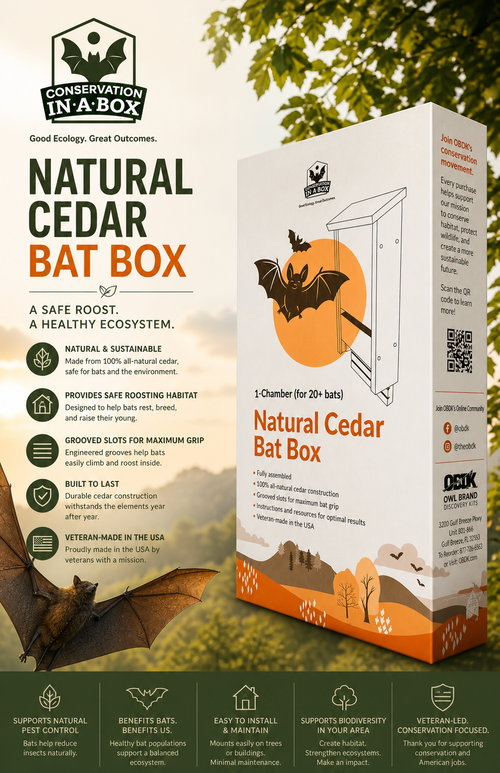
- habitat-support tools (like bat houses in appropriate locations)
- classroom models and simulations
- sound, data, and evidence-based lessons
We can teach the story without interrupting it.
Classroom Connection
Activity: “Roost Requirements” Design Challenge
Students design the “best” maternity roost based on survival needs.
Materials: paper, a simple roost blueprint template, and four requirement cards:
- warmth
- safety
- proximity to food
- weather protection
Steps:
- Students choose a roost type (tree cavity, bat house, attic, under bark).
- They label features that meet each requirement.
- They add one risk (cold snap, predator, human disturbance) and revise the design.
- They write a mini CER:
- Claim: This roost is best because…
- Evidence: it provides ___, ___, and ___
- Reasoning: pups need warmth and safety because…
- Limitation: location and species change the answer
Extension: Link the design to a map: where would you place a bat house and why?
The Takeaway
Spring for bats isn’t just a season of flight.
It’s a season of family.
A maternity roost is a warm, hidden nursery where mothers do the hard work: pregnancy, birth, nursing, and raising a pup toward that first night in open air.
It’s quiet work. Invisible work.
But it’s also one of the clearest examples of what wildlife really is:
Not just animals outside.
But lives unfolding, carefully, in the places we rarely think to look.