
No Products in the Cart
Why Do Owls Yawn? What That Wide-Open Beak Might Really Mean

An owl opens its beak wide, narrows its eyes, and tips its head back. To us, it looks obvious: the owl is yawning.
That may be true, but wildlife behavior is rarely that simple. Birds do yawn, and yawning has been documented across many species. What scientists are still working out is exactly why it happens and whether the same explanation applies every time.
That uncertainty makes this a useful classroom question, because it gives students a chance to practice the difference between observation and interpretation.
The better question is not simply, “Why is that owl yawning?” It is, “What evidence would help us understand what this behavior means?”
First, Is It Really a Yawn?
Birds can perform wide-mouth movements that look very much like yawning, but not every open beak means the same thing. A bird may also open its beak for reasons that have nothing to do with a yawn:
Vocalizing: calling, hooting, or begging.
Panting: open-beak breathing to lose heat.
Handling food: manipulating or swallowing prey.
Reacting: responding to something nearby.
If a student says, “The owl is sleepy,” ask what they actually saw. Perhaps they saw this:
The owl opened its beak.
Its eyes were partly closed.
It remained perched in the same place.
Those are observations. “Sleepy” is an interpretation.
That distinction may seem small, but it is one of the most important habits in wildlife science. Good observers describe first and explain second.
A Yawn May Mark a Change in Activity
Yawning is often associated with transitions in behavioral state. Animals may yawn around periods of rest, waking, or changes in alertness. That does not mean every yawn equals “tired,” but it does suggest that yawning can occur when the body is shifting from one state to another.
For an owl, the clues before and after the yawn can help students think more carefully:
Before: Was the owl resting?
Right after: Did it stretch?
Then what: Did it begin preening, look around, or fly away?
Or nothing: Did it simply settle back down?
A single movement tells us very little. A sequence of movements gives us much more useful evidence.
Could Temperature Be Part of the Story?
Researchers have also studied a possible connection between yawning and thermoregulation. In some birds and mammals, yawning appears to be influenced by temperature, and one hypothesis is that it may help with cooling.
That does not mean every owl yawn on a warm day is a cooling behavior. It simply means temperature may be one factor worth considering.
There is also an important distinction here: birds can use open-beak breathing or other heat-loss behaviors when they are hot, and that is not the same thing as a discrete yawn.
So if students see an owl with its beak open on a warm day, they should not jump straight to one explanation. They should look for more clues:
Repetition: Does the behavior happen again, or just once?
Breathing: Is the bird breathing rapidly?
Posture: Does the body position change?
One clue suggests a possibility. Several clues build a stronger case.
What About Stress?
Yawning can also change during periods of physiological arousal or disturbance in some birds, but that does not mean a single yawn proves an owl is stressed.
This is where careful language matters:
Less careful: “The owl is stressed.”
More careful: “The owl showed a behavior that may be influenced by arousal or disturbance, but we would need more evidence.”
That small change keeps the interpretation honest.
The same rule applies to other animal behaviors. An owl that squints is not automatically annoyed. An owl that turns away is not necessarily ignoring us. An owl that opens its beak is not automatically tired.
Behavior needs context.
The Observation Trap
Humans are very good at giving animal behavior a human story. Use this quick chart to help students separate what they saw from what they assumed.
What the Owl Does |
What We Assume |
What We Actually Observed |
|---|---|---|
Squints |
It is annoyed |
The eyes narrowed |
Turns away |
It does not like us |
The head turned |
Opens its beak |
It must be sleepy |
The beak opened |
Those interpretations feel natural because owl faces are easy for us to read as expressions. Their large forward-facing eyes make them seem especially familiar.
But an owl is not making a human facial expression. It is behaving like an owl.
That makes yawning a perfect teaching moment. Instead of asking students to guess what the owl “feels,” ask them to describe exactly what happened and then build possible explanations from the evidence.
Classroom Connection: Observation or Interpretation?
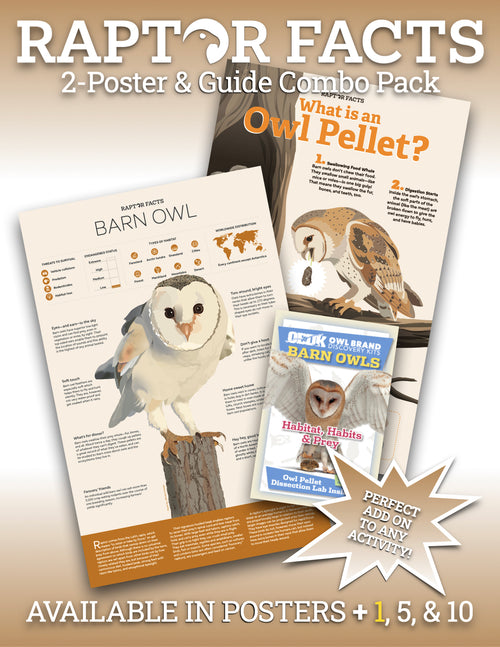
This activity works well with a short owl video, a photograph, or an OBDK owl poster.
Materials
A short owl video, a photograph, or an OBDK owl poster
Paper or a shared board with two columns
Optional: a second owl species for comparison
Steps
Observe: Show students an owl and ask them to describe what they notice without explaining why it is happening.
List observations: They might write, “The owl opened its beak,” “Its eyes were partly closed,” or “Its head tilted backward.”
List interpretations: Build a second list, such as resting, changing activity level, cooling, or reacting to something nearby.
Add context: Tell them the owl had been resting for twenty minutes, or that the temperature was unusually warm, or that it had just become alert after hearing a sound.
Revise: Ask whether that new information changes their interpretation.
Science sentence frame
“I think the owl may be ______ because I observed ______. Another possible explanation is ______.”
That simple structure teaches caution, evidence, and scientific reasoning all at once.
Product Connection: Owl Posters
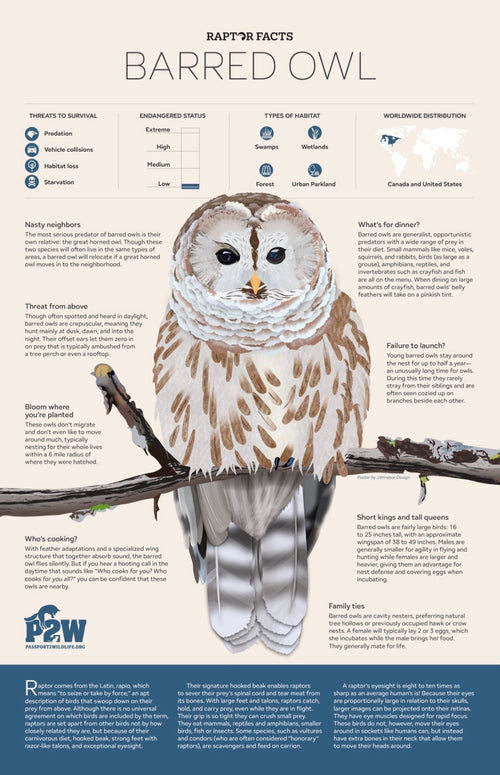
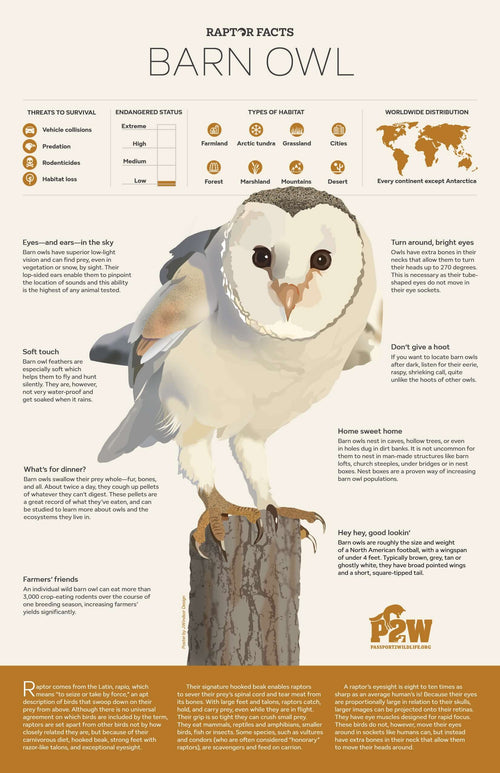
OBDK owl posters can support this lesson by giving students a fixed visual reference for anatomy and posture. While they discuss what they can observe directly and what requires interpretation, they can compare:
Beak shape
Eye position
Facial feathers
Head position
The poster becomes more than decoration. It becomes part of the evidence.
Teacher Takeaway
So why do owls yawn?
The most accurate answer is that scientists do not have one confirmed explanation for every yawn. Research across birds suggests that yawning has physiological functions and may be connected to changes in behavioral state and thermoregulation.
What we should not do is look at one open beak and immediately decide that the owl is tired, stressed, hot, or anything else.
That uncertainty is not a weakness. It is the lesson.
Wildlife science is not about instantly naming every behavior. It is about noticing carefully, comparing possibilities, and asking a better question:
What did we actually observe, and what are we only interpreting?