
No Products in the Cart
That Screaming in Your Garden Is a Teenager: August Barn Owl Begging Calls

Hook: that scream outside the window may be a teenager asking for dinner.
August nights can feel loud in the strangest way. The garden is dark. The tomatoes are heavy. Crickets are ticking in the grass. Then suddenly a rough, rasping scream cuts across the yard. It sounds dramatic.
But if you live near fields, barns, orchards, or open edges, that call may not be danger at all. It may be a juvenile Barn Owl begging for food.
In many places, late summer is when young Barn Owls are out of the nest but not fully independent yet. They can fly. They can explore. They can land in odd places. And they can be very, very loud.
The August Owl Soundtrack
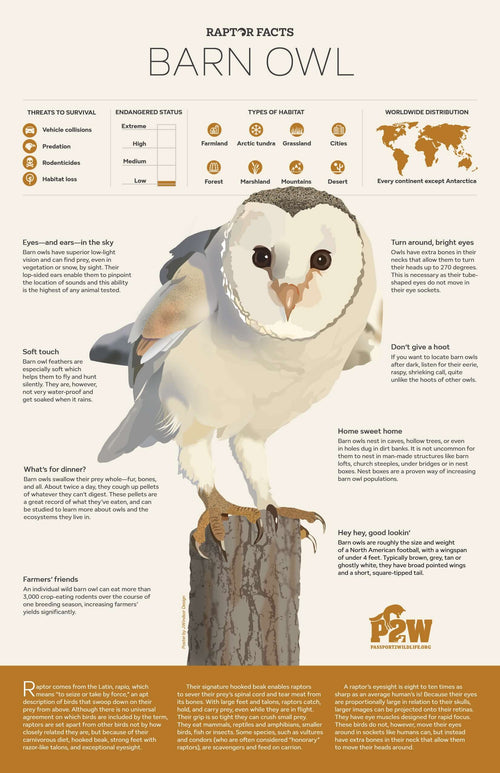
Barn Owls do not give the classic “who cooks for you?” hoot many students expect. Their calls are often raspy, hissing, screeching, or breathy more like wind through an old barn than a storybook owl.
Young Barn Owls add another layer: begging calls. These calls often happen after fledging, when juveniles are learning the neighborhood but still depend on adults for food.
Students may hear them from:
Barn rafters near a nesting site
Large trees along a field edge
Fence lines or garden posts
Open sheds and quiet outbuildings
Hedgerows where young owls wait at night
The sound can be surprising because it is not gentle. It is a young predator saying, loudly, “I am here. Feed me.”
Why Juvenile Barn Owls Beg
Begging is communication. For a young owl, it helps adults locate it after dark. It may also signal hunger, position, or persistence.
Think of it as a noisy family check-in. After Barn Owls leave the nest, they do not instantly become expert hunters. Flying is one skill. Catching prey in darkness is another.
Young owls still need practice with:
silent flight
listening for mice and voles
judging distance
landing accurately
carrying prey
So begging calls are not random drama. They are part of the messy middle between nestling and independent hunter.
Why It Peaks in Late Summer
Barn Owl nesting timing can vary by region, weather, food supply, and even second nesting attempts. But in many areas, August is a perfect window for students to notice young owls becoming more visible and more audible. By late summer, many juveniles have reached the stage where they are:
large enough to leave the nest
mobile enough to move around the roost area
hungry enough to call often
inexperienced enough to depend on adults
That makes August a special owl-listening month. Not because every Barn Owl family follows the same calendar. Because this is when the evidence often gets loud.
Garden Screams Are Habitat Clues
If a Barn Owl is calling near a garden, ask students a better question than “Is it scary?”
Ask: Why here?
Barn Owls hunt mostly small mammals, especially in open habitats. Gardens, fields, pastures, orchards, and edges can all support the prey they need.
A calling juvenile may suggest nearby habitat has:
open hunting space where adults can glide low
rodent activity in grass, compost edges, or field margins
roosting shelter such as barns, trees, or nest boxes
quiet night corridors with less disturbance
That scream is not just a sound. It is a clue in the food web.
What To Do If You Hear One
The best response is calm curiosity. Watch from a distance. Keep pets indoors at night if young wildlife is active nearby. Avoid shining bright lights directly at the owl. If a young owl is perched awkwardly but alert, it may simply be in the normal fledgling stage.
If it is on the ground, injured, tangled, or unable to move away, contact a licensed wildlife rehabilitator or local wildlife authority. The classroom message is simple:
Observe first
Do not handle wildlife
Look for evidence
Ask an expert when something seems wrong
A clue, not a rule. That is good owl science.
Classroom Connection: “Who’s Calling?” Night Sound Detective
Use this activity to turn an eerie sound into a calm investigation.
Materials
Audio clips of Barn Owl calls, if available
Paper or science notebooks
A simple map of a yard, schoolyard, farm, or imaginary habitat
Sticky notes for evidence clues
Step 1: Listen and Notice
Ask students to describe the sound without naming the animal.
Was it high, low, raspy, repeated, close, or far away?
What did the sound make them imagine?
Step 2: Add the Owl Evidence
Tell students it may be a juvenile Barn Owl begging.
Add habitat clues: field edge, barn, garden, mice, darkness.
Ask students to revise their first idea.
Step 3: Build a Claim
Claim: The sound could be a juvenile Barn Owl.
Evidence: rasping call, August timing, open habitat nearby.
Reasoning: young owls beg after fledging while adults still feed them.
Then ask: What evidence would make you more confident?
The Takeaway
That August scream in the garden may sound spooky. But it may be something much more interesting: a young Barn Owl learning how to become a hunter.
Juvenile begging calls remind students that wildlife has life stages, family systems, and noisy transitions.
The next time they hear a strange sound after dark, ask them:
What is the evidence telling us and what should we listen for next?